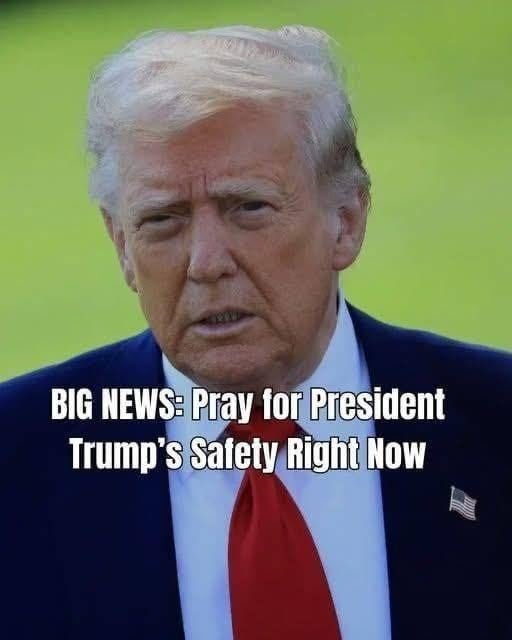
Thank you for sharing that headline. It’s important to approach this topic with factual context and an understanding of the professional protocols involved.
The safety of any protectee, especially a former President and current major party candidate, is a matter of utmost seriousness and is handled by highly trained professionals. While commentary from former officials can provide insight, the actual security measures are governed by strict, non-partisan protocols.
Here is a breakdown of the key points relevant to this topic:
1. The Role of the U.S. Secret Service (USSS)
The Secret Service’s protective mission is defined by federal law and is entirely risk-based, not person-based. The protection details for major presidential candidates are mandated by law, and for former presidents, it is a lifetime provision. The agency operates on proven, apolitical protocols developed over decades.
2. Understanding “Concern” from a Former Agent
When a former agent like Dan Bongino expresses concern, it is typically based on a professional assessment of two factors that are part of any protective intelligence operation:
-
Threat Environment: The publicly visible temperature of political discourse and any known increase in threatening communications.
-
Protective Challenges: The logistical difficulties of protecting a candidate who engages in frequent, large-scale public rallies—a environment very different from the controlled perimeter of the White House.
This perspective highlights the inherent difficulty of the job in a contentious climate but is not an indictment of the current protective team’s competence.
3. The Current Protective Reality
-
Enhanced Scrutiny: Following the 2021 incident, the USSS and congressional committees conducted extensive reviews. Security for all protectees has been under a microscope, likely leading to revised and reinforced procedures.
-
Robust Measures: Former President Trump, as a major candidate, receives a full protective detail. This includes advance teams, counter-sniper units, intelligence analysts monitoring threats, and a secure perimeter at all events.
-
Shared Responsibility: While the Secret Service leads close protection, event security is a unified command effort that includes local and state law enforcement, which provides crucial manpower and local knowledge.
4. The Importance of Measured Discussion
Headlines about safety concerns serve an important function in highlighting the importance of the Secret Service’s mission. However, it is also critical to:
-
Avoid speculation that could undermine public confidence in the agency.
-
Recognize that detailed discussions of specific security measures are inappropriate for public discourse, as they could compromise operational security.
-
Understand that the men and women on these details are career professionals dedicated to their mission, regardless of their personal politics.
Conclusion:
While commentary from informed former officials is valuable for public understanding, the protection of former President Trump is managed by the U.S. Secret Service under established, rigorous protocols. The agency’s mission is to mitigate risk in dynamic environments—a tremendously challenging task that they are specifically trained and equipped to handle. Public discussion is most constructive when it focuses on supporting the apolitical nature of this critical work and respecting the professionalism of those who perform it.