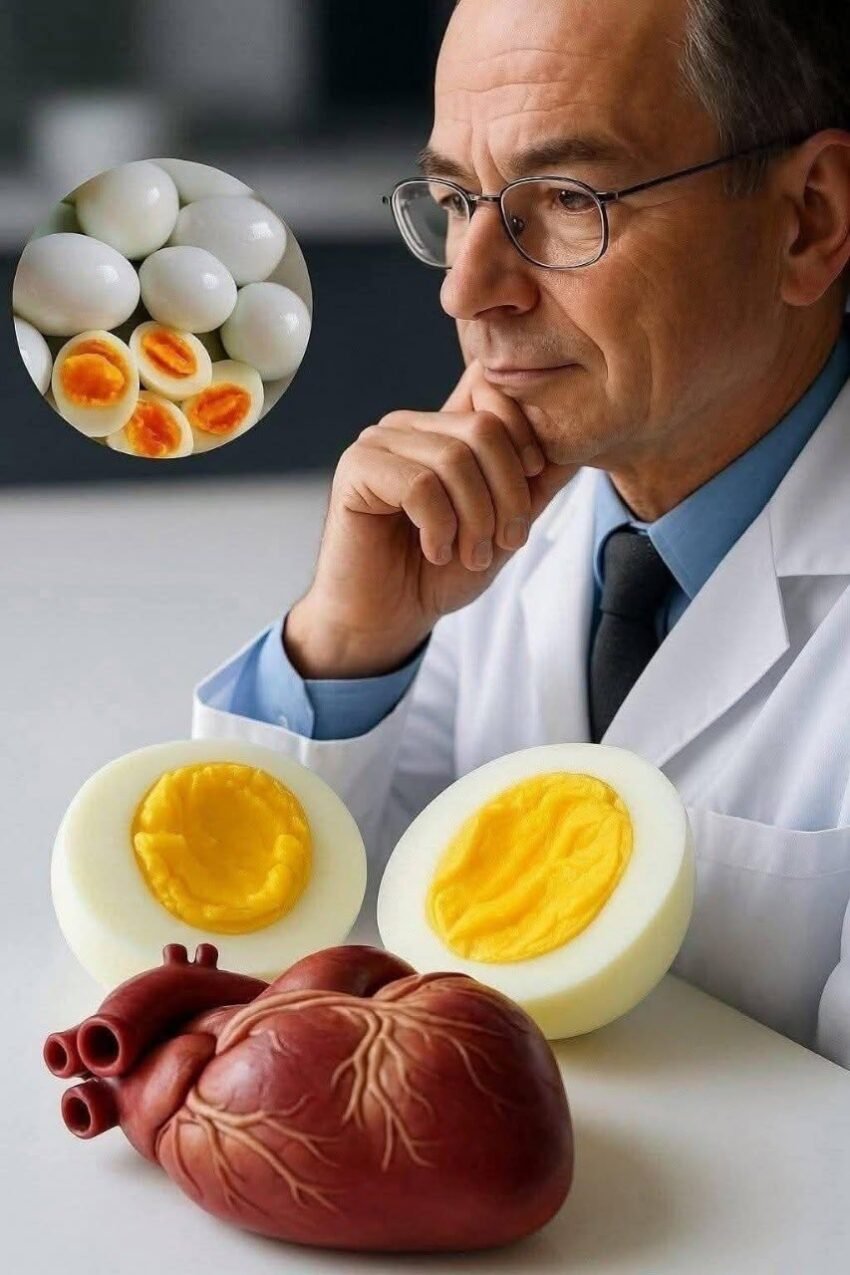
Based on medical information from doctors and health organizations, the potential risks associated with eating hard-boiled eggs are primarily related to food safety (bacterial infection) if they are not handled correctly, rather than the eggs themselves being inherently harmful.
Here is a breakdown of the key findings and the specific “causes” that doctors warn about regarding hard-boiled eggs:
🦠 Food Poisoning from Improper Handling (Most Common Risk)
The most significant health risk linked to hard-boiled eggs is food poisoning, which is caused by bacterial contamination, not the egg itself. If hard-boiled eggs are prepared or stored incorrectly, they can become a breeding ground for harmful pathogens.
Doctors and health authorities highlight the following specific causes of illness:
-
Bacterial Growth After Cooking: The process of hard-boiling kills bacteria like Salmonella. However, if the eggs are not refrigerated promptly, any new bacteria that come into contact with the egg (e.g., from handling or cracked shells) can multiply rapidly. A historical 1917 study cited by a doctor noted that the boiling process can make the inner membrane more permeable, allowing bacteria to enter more easily. A more recent report from 1984 documented a large outbreak of staphylococcal food poisoning affecting an estimated 300 children who ate hard-boiled eggs that had been prepared days in advance and left unrefrigerated.
-
Contamination from Water or Surfaces: Hard-boiled eggs can reabsorb bacteria if they are cooled in contaminated water or handled with unwashed hands. The porous nature of the shell means that if it cracks, bacteria can enter the egg.
-
Symptoms: Infection with bacteria like Salmonella or Staphylococcus can lead to headaches, stomach cramps, nausea, vomiting, and diarrhea.
🩺 Impact on Cholesterol (Outdated Concern)
For decades, there was a popular belief that eating eggs, including hard-boiled ones, causes high cholesterol and heart disease. Current medical research has largely debunked this myth.
-
What New Studies Show: Recent experiments published in The American Journal of Clinical Nutrition (2025) show that for most healthy people, eating eggs does not raise “bad” LDL cholesterol levels. In fact, people who ate two eggs a day as part of a diet low in saturated fat saw a reduction in their LDL cholesterol.
-
The Real Culprit: Doctors now explain that saturated fat (found in foods like bacon, sausage, and butter) is the primary dietary factor that raises blood cholesterol, not the cholesterol found naturally in eggs. As one researcher put it, “it’s not the eggs you need to worry about – it’s the extra serve of bacon or the side of sausage”.
🤧 Allergic Reactions (For Sensitive Individuals)
For people with an egg allergy, eating hard-boiled eggs can cause an allergic reaction. However, there is a nuance regarding preparation:
-
Reduced Allergenicity: Surprisingly, medical studies indicate that prolonged boiling can actually make eggs less allergenic for some people. Research shows that boiling an egg for 45 minutes leads to significant structural changes in the allergenic proteins, which can reduce its ability to trigger a reaction. This is why many children with an egg allergy are often able to tolerate a well-cooked, hard-boiled egg but might react to a lightly cooked or raw egg.
🩺 Recommendations for Safe Consumption
To enjoy hard-boiled eggs safely and avoid any negative health effects, doctors and food safety experts recommend the following guidelines:
| Step | Recommendation | Why It’s Important |
|---|---|---|
| Cooking | Boil until the white and yolk are firm. Ensure a core temp of at least 70°C (~160°F) for 2 minutes. | This is necessary to kill any bacteria present (e.g., Salmonella). |
| Cooling & Storage | Refrigerate uneaten eggs within 2 hours of cooking. | This stops any remaining or new bacteria from multiplying to dangerous levels. |
| Eating After Decorating | Do not eat eggs that have been used for hunts or decoration for more than 2 hours, especially if shells cracked. | The egg can pick up dirt, bacteria, and other contaminants from the environment. |
In summary, while headlines might claim that doctors warn about hard-boiled eggs, the medical consensus is that they are a safe and nutritious food. The primary risk is not the egg itself, but bacterial infection resulting from improper storage or handling. When cooked, cooled, and stored correctly, hard-boiled eggs are an excellent source of protein and do not pose a heart health risk for the vast majority of people.
I hope this information is helpful. Would you like me to provide some specific, safe methods for cooling and storing hard-boiled eggs?