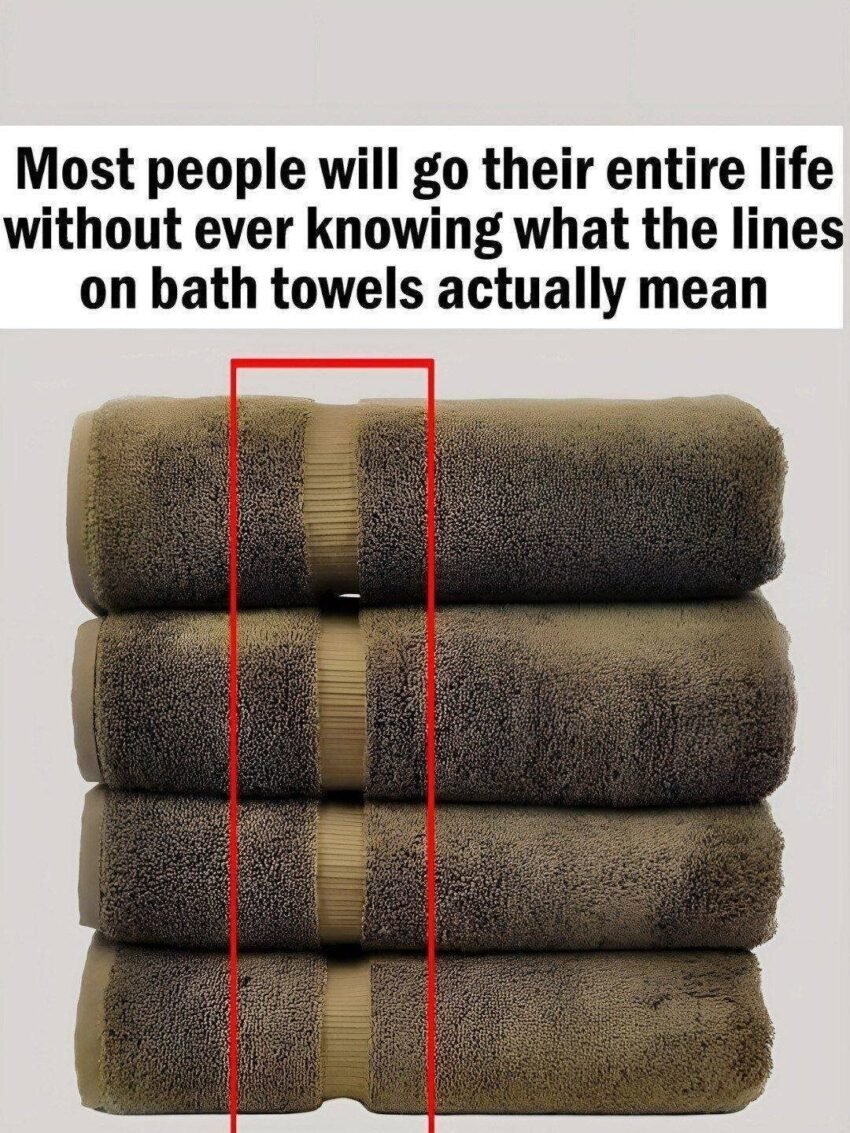
Both “dobby border” and “dobby weave” are accurate terms, but they describe slightly different aspects of what you’re seeing. Let’s break it down:
1. Dobby Weave
This is the broader category. A dobby weave is created on a dobby loom, which is a type of loom that can control individual warp threads with a set of harnesses (more complex than a basic loom, but less complex than a Jacquard loom). This allows for the creation of small, geometric, and repeating patterns—like the diamonds, squares, or raised dots you often see on dress shirts, bedding, or table linens.
-
Key point: “Dobby weave” refers to the technique and structure of the fabric itself.
2. Dobby Border
This is the specific application relevant to your find. A “dobby border” is a decorative stripe or band woven into the edge of a piece of fabric (like a towel, blanket, or placemat) using the dobby technique.
-
It’s often a textural, slightly raised pattern that runs along the selvedge (the finished edge).
-
It serves both a decorative purpose and as a mark of higher quality, as it requires a more complex loom setup than a plain weave.
-
Key point: “Dobby border” refers to the decorative patterned strip on the edge of an item.
What You Likely Have
If you’re looking at a towel, napkin, or blanket with a distinct patterned band along its short edge, “dobby border” is the perfect term. It tells you that the decorative band was woven in using a special dobby attachment on the loom.
A simple analogy:
-
Dobby Weave is like the technique of “basket weaving.”
-
Dobby Border is like a “basket-woven trim” on the edge of a bag.
Other common names you might encounter for the same thing:
-
Jacquard Border: If the pattern is more intricate, pictorial, or non-geometric (like a floral vine), it might be made on a Jacquard loom. The term “Jacquard border” is often used interchangeably in marketing, though technically there is a difference in the loom mechanism.
-
Woven Border or Decorative Selvedge are more generic terms.
In summary: For precision, call it a dobby border. To describe the fabric of that border, you ca