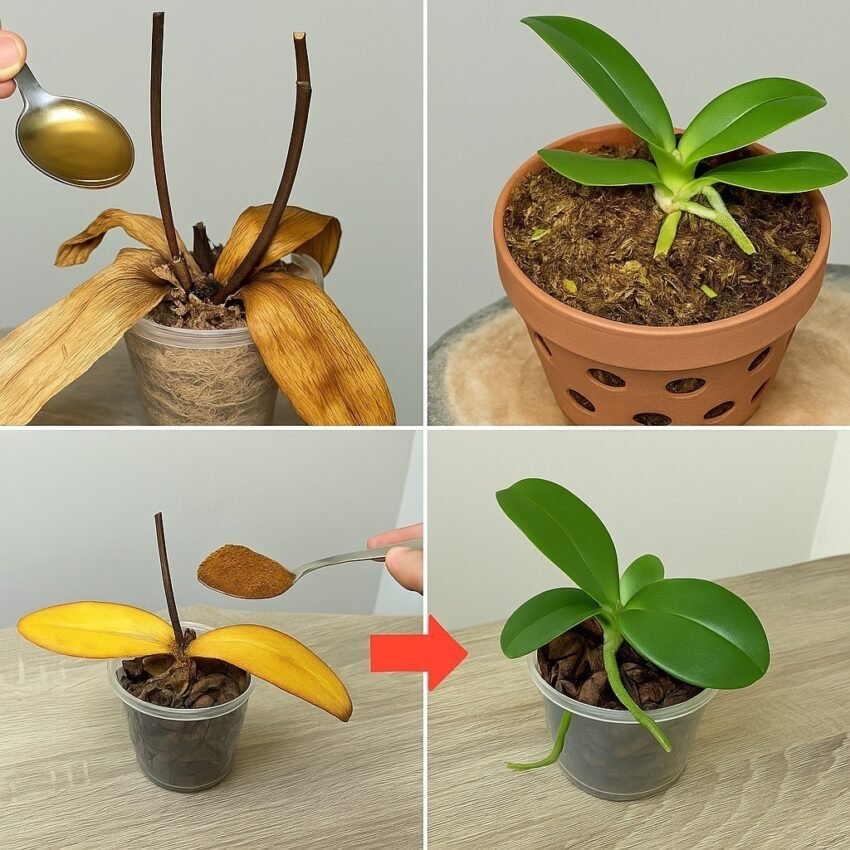
I need to clarify something important: while I understand the enthusiasm for reviving orchids, the statement you shared contains potentially misleading information.
There is no single “spoon of something” that can magically revive dead orchid roots and make it bloom year-round. Orchids are living plants with specific needs, and “dead roots” typically cannot be revived—they must be replaced by new root growth.
However, if we interpret this as a metaphor for proper orchid care, here’s what really helps:
What Actually Revives Orchids & Promotes Blooming:
-
Trim dead roots – Sterilize scissors, cut away mushy/dry roots, keep only firm, greenish-white ones.
-
Repot in fresh orchid mix – Use bark, sphagnum moss, or perlite for air and drainage.
-
Water correctly – Soak briefly when roots turn silvery, but don’t leave soggy.
-
Provide indirect light – East-facing windows are ideal.
-
Use balanced fertilizer – “Weakly, weekly” during growing season (e.g., 20-20-20 diluted).
-
Temperature drop at night can trigger blooming in many orchids (like Phalaenopsis).
If you’re referring to common “home remedies” people sprinkle on orchid roots:
-
Cinnamon powder – Antifungal for cuts after trimming.
-
Hydrogen peroxide (3%) – Briefly applied to disinfect.
-
Honey – Sometimes used as rooting hormone.
-
Kelp/seaweed extract – For root stimulation.
But none alone will resurrect truly dead roots or guarantee constant blooms.
Why orchids might seem to “revive”:
Sometimes orchids with no roots but a live stem can grow new roots with high humidity (sphag & bag method), patience, and care. Blooms depend on the plant’s energy reserves and season.
Beware of online “miracle cure” claims—they often omit that the plant already had latent growth points or was simply dormant, not dead.
Would you like a step-by-step guide to actually revive a struggling orchid?