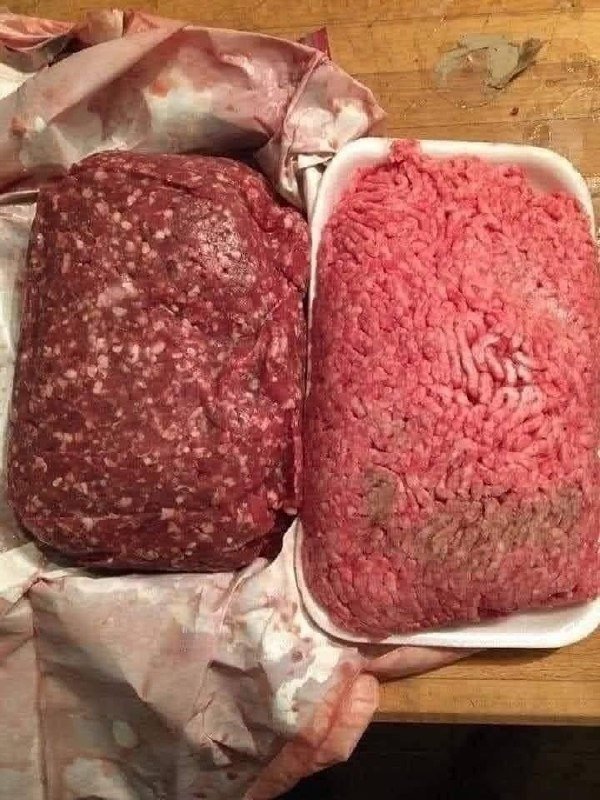
This is an excellent and important question that touches on health, ethics, sustainability, and taste. The differences between commercially processed meat (often called “conventional” or “industrial”) and farm-raised/locally sourced meat (often associated with “pasture-raised,” “grass-fed,” or “regenerative” farming) are significant and multi-layered.
Here’s a detailed breakdown of the key differences:
1. Farming Practices & Animal Life
-
Commercial/Industrial:
-
Environment: Animals (cattle, pigs, chickens) are typically raised in Confined Animal Feeding Operations (CAFOs). High stocking densities, often indoors or in feedlots.
-
Diet: Designed for maximum, rapid growth. Cattle are fed primarily grains (like corn and soy), even though they are ruminants adapted to grass. This can cause health issues requiring antibiotics. Chickens and pigs eat grain-based feed.
-
Growth & Interventions: Use of growth-promoting hormones (allowed in beef in some countries, banned in poultry and pork in many) and routine, sub-therapeutic antibiotics to prevent disease in crowded conditions.
-
-
Farm-Raised/Local (Ideal Models):
-
Environment: Animals are often pasture-raised, with access to open space, sunlight, and the ability to express natural behaviors (foraging, rooting, dust-bathing).
-
Diet: More species-appropriate. Cattle are often grass-fed and grass-finished. Poultry and pigs may have pasture access to eat insects, seeds, and plants alongside non-GMO or organic feed.
-
Growth & Interventions: No growth hormones (a common standard). Antibiotics are used only to treat sick animals, not routinely. Many farms are organic or follow regenerative practices that rebuild soil health.
-
2. Processing & Supply Chain
-
Commercial/Industrial:
-
Scale & Speed: Processed in massive facilities at very high line speeds (e.g., thousands of chickens per hour). This can increase contamination risk.
-
Supply Chain: Long and complex. An animal may be raised in one state, shipped to a feedlot in another, slaughtered in another, and packaged in yet another, traveling thousands of miles.
-
Additives: Often contains additives for preservation, moisture retention, and color (e.g., sodium nitrite, phosphates, sodium erythorbate). “Meat glue” (transglutaminase) may be used to bind smaller pieces into uniform cuts.
-
-
Farm-Raised/Local:
-
Scale & Speed: Processed in smaller, often state or federally inspected facilities (sometimes on-farm) with slower line speeds, allowing for more careful handling.
-
Supply Chain: Very short, often direct-to-consumer (farmers’ markets, CSAs) or through local butchers/grocers. Traceability is high—you can often know the exact farm.
-
Additives: Typically minimal to none. Often sold fresh or simply frozen without preservatives.
-
3. Nutritional Profile
-
Commercial/Industrial:
-
Fat Profile: Grain-fed beef has a higher proportion of saturated fat and contains more omega-6 fatty acids. Lower in beneficial conjugated linoleic acid (CLA) and omega-3s.
-
Micronutrients: Generally lower in certain antioxidants like Vitamin E and beta-carotene (which gives grass-fed fat a yellowish tint).
-
-
Farm-Raised/Local (Grass-fed/Pastured models):
-
Fat Profile: Grass-fed beef has a better fat ratio: higher in omega-3s, CLAs (linked to health benefits), and stearic acid (a neutral saturated fat).
-
Micronutrients: Significantly higher in Vitamins A and E, and antioxidants. Pastured eggs are famously higher in Vitamin D and omega-3s.
-
4. Environmental & Ethical Impact
-
Commercial/Industrial:
-
High environmental footprint: Concentrated waste, high greenhouse gas emissions, and significant water and grain use.
-
Ethical concerns: Focus is on efficiency and cost, often at the expense of animal welfare (crowding, lack of natural behaviors).
-
-
Farm-Raised/Local (Regenerative models):
-
Potential for lower/positive impact: Well-managed pastures can sequester carbon in soil, promote biodiversity, and create closed-loop systems (manure as fertilizer). Hugely variable—not all small farms are inherently sustainable.
-
Ethical focus: Generally prioritizes animal welfare through lower stress and more natural living conditions.
-
5. Taste, Texture, & Price
-
Commercial/Industrial:
-
Taste: Consistent, mild, and often described as “standard.” Fat is whiter and less flavorful.
-
Texture: Tender due to marbling from grain-finishing and specific breeds.
-
Price: Significantly cheaper due to economies of scale, government subsidies on feed grains, and efficient (if intensive) systems.
-
-
Farm-Raised/Local:
-
Taste: More variable and distinctive. Grass-fed beef is often described as more “mineraly,” “earthy,” or “gamey.” Fat is yellower and richer-tasting.
-
Texture: Can be leaner and chewier if not cooked properly (low-and-slow is key). Pastured chicken has a firmer texture.
-
Price: More expensive, reflecting true costs of labor, land stewardship, and slower growth.
-
Summary Table
| Aspect | Commercial/Industrial Meat | Farm-Raised/Local Meat (Ideal) |
|---|---|---|
| Life & Diet | Confined (CAFOs), grain-fed, routine antibiotics | Pasture-access, species-appropriate diet, antibiotics only when sick |
| Processing | Large-scale, additives common, long supply chain | Small-scale, minimal additives, short/transparent chain |
| Nutrition | Higher in omega-6, lower in CLA, omega-3, vitamins | Better fat profile, higher in antioxidants & certain vitamins |
| Environment | High footprint, waste management issues | Potential for carbon sequestration, biodiversity (varies) |
| Ethics | Focus on efficiency, welfare often secondary | Welfare often prioritized, more natural life |
| Taste/Texture | Consistent, mild, tender | Variable, robust, can be leaner/chewier |
| Cost | Low (subsidized, efficient) | High (reflects true cost of production) |
Key Takeaway
The core difference is a philosophy of production. Commercial meat prioritizes uniformity, efficiency, and low cost. Farm-raised/local meat (at its best) prioritizes animal welfare, environmental health, and nutritional density, resulting in a more expensive but often more flavorful and ethically distinct product.
What to look for if you want better meat: Seek out specific, meaningful labels like “Animal Welfare Approved,” “Certified Humane,” “100% Grass-Fed & Finished,” or better yet, talk directly to a farmer at your local market about their practices. “Natural” and “Free-Range” are often weak or misleading terms.