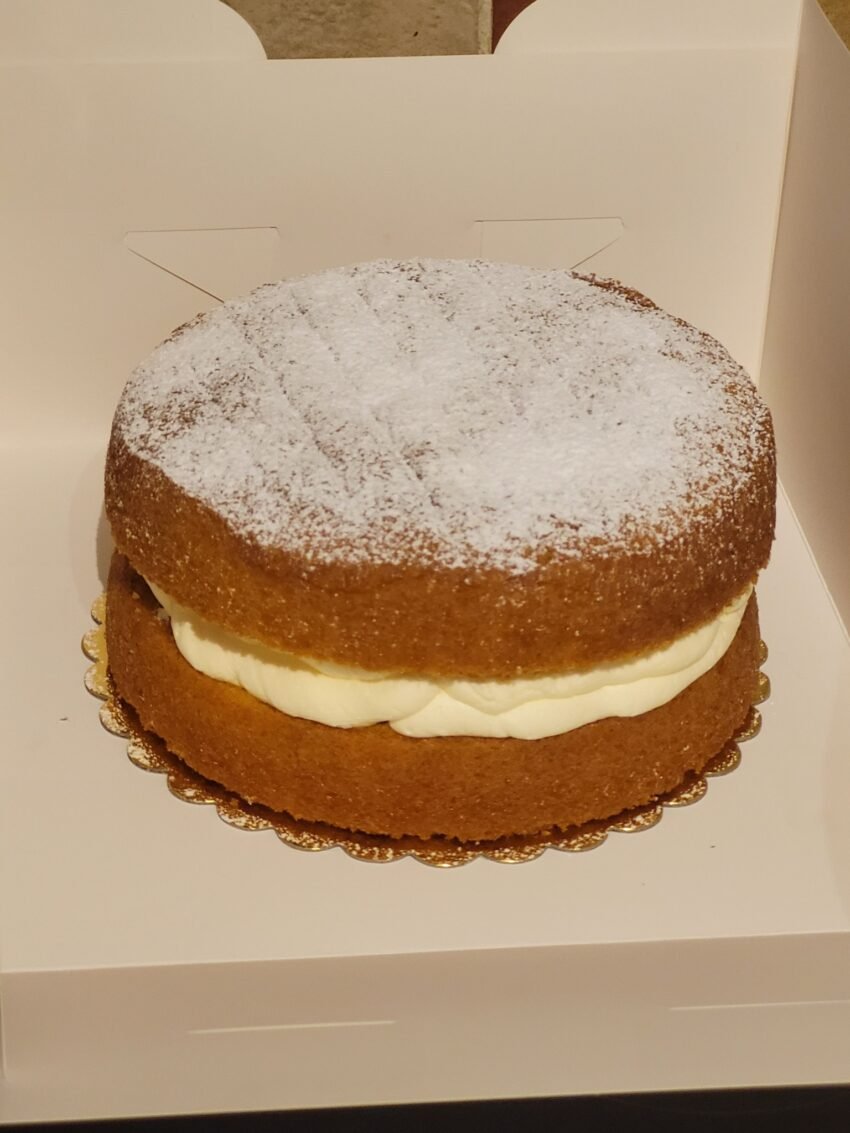
The Victoria Sponge Cake is the quintessential British teatime classic. Named after Queen Victoria, it’s beloved for its elegant simplicity, perfect balance, and delightful texture. It’s not overly sweet, and the magic lies in the quality of its few ingredients.
Here is the definitive, foolproof recipe.
Classic Victoria Sponge Cake
This recipe yields a light, buttery cake with a tender crumb, layered with jam and cream.
Prep Time: 20 mins | Bake Time: 20-25 mins | Total: 1 hour (plus cooling)
Servings: 8-10
Ingredients
For the Sponge Cakes:
-
200 g (1 cup) caster sugar (superfine sugar; granulated works in a pinch)
-
200 g (¾ cup + 2 tbsp) softened unsalted butter, plus extra for greasing
-
4 large eggs, at room temperature
-
200 g (1 ⅔ cups) self-raising flour, sifted
-
1 tsp baking powder
-
1 tsp vanilla extract or paste
-
1-2 tbsp milk, if needed
For the Filling:
-
6-8 tbsp good-quality strawberry or raspberry jam
-
150 ml (⅔ cup) heavy cream or double cream, chilled
-
1-2 tbsp icing sugar (confectioners’ sugar), for the cream and dusting
Equipment
-
Two 8-inch (20cm) round cake pans
-
Parchment paper
Instructions
1. Prep & Preheat:
-
Preheat oven to 350°F (180°C/Gas Mark 4).
-
Grease the pans and line the bottoms with parchment paper circles.
2. Make the Batter (The “All-in-One” Method):
-
In a large bowl, combine all sponge ingredients except the milk (softened butter, caster sugar, eggs, self-raising flour, baking powder, vanilla).
-
Using an electric mixer, beat for 2-3 minutes until pale, creamy, and smooth. The mixture should drop easily from a spoon. If it seems stiff, beat in a tablespoon of milk.
3. Bake:
-
Divide the batter evenly between the prepared pans. Smooth the tops.
-
Bake on the middle rack for 20-25 minutes, or until golden, springy to the touch, and a skewer inserted into the center comes out clean.
-
Let the cakes cool in their pans for 5 minutes, then turn out onto a wire rack to cool completely. They must be completely cold before filling.
4. Prepare the Filling:
-
Whip the chilled cream with 1 tbsp of icing sugar until it holds soft peaks.
-
If your jam has large fruit pieces, give it a quick stir to loosen.
5. Assemble (The Traditional Way):
-
Place one cake layer on a serving plate, top-side down (for a flat surface).
-
Spread the jam evenly over the surface.
-
Spoon or pipe the whipped cream over the jam.
-
Gently place the second cake layer on top, top-side up (so the dome creates a nice shape).
-
Dust the top generously with icing sugar through a fine sieve.
The Golden Rules for a Perfect Victoria Sponge
-
Weigh Your Ingredients: For this classic, metric weights are crucial for the perfect 1:1:1:1 ratio (equal weights of sugar, butter, eggs, flour).
-
Room Temperature Butter & Eggs: This is non-negotiable for proper creaming and a light, airy texture.
-
Don’t Overmix After Adding Flour: Mix just until combined to avoid a tough cake.
-
Cool Completely: Assembling a warm cake will melt the cream into a soggy mess.
-
Serve Fresh: Assemble no more than a few hours before serving for the best texture.
Presentation & Variations
-
Classic: Dust with icing sugar.
-
Queen Victoria’s Style: Just a layer of jam in the middle (no cream).
-
Modern Twist: Add a layer of fresh berries between the jam and cream.
-
Lemon Victoria Sponge: Add the zest of one lemon to the batter and use lemon curd instead of jam.
How to Serve
Cut into wedges and serve with a proper cup of English breakfast tea or coffee. It’s the star of any afternoon tea, garden party, or celebration.
Enjoy this timeless, elegant bake—a true test of a baker’s skill in its beautiful simplicity.