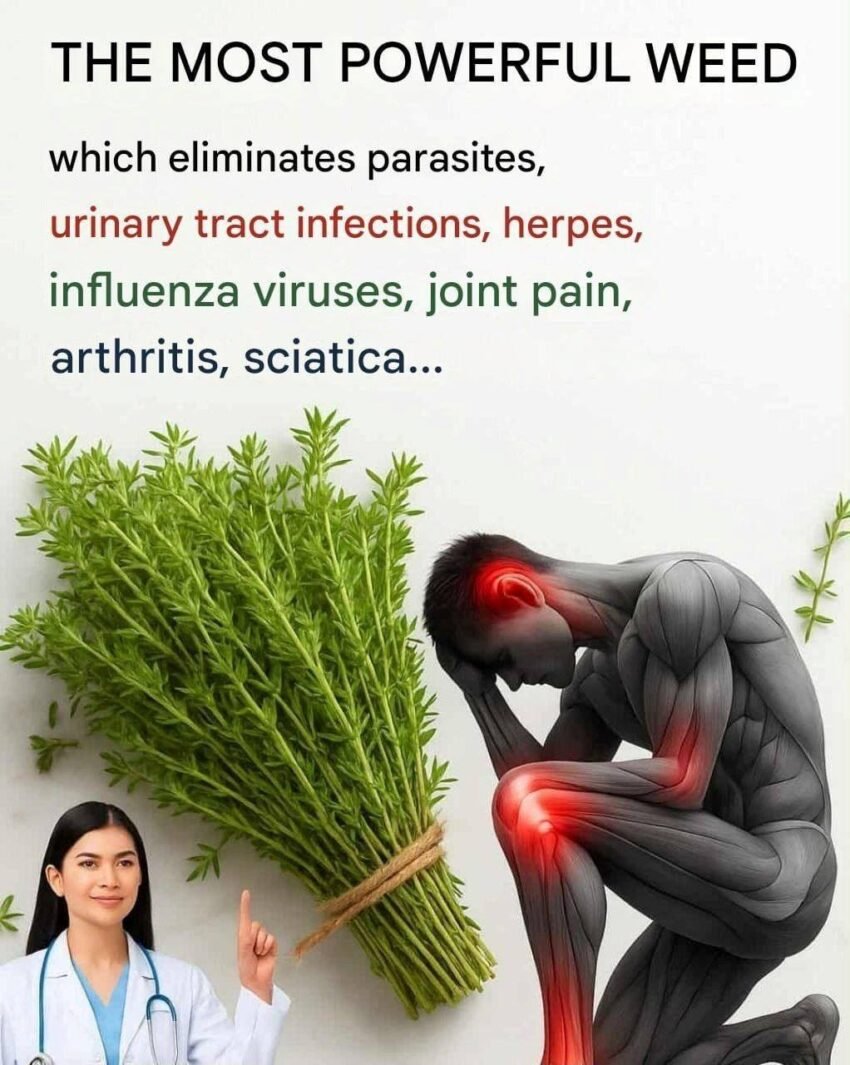
Selecting the “most powerful” medicinal plant is subjective, as “powerful” can mean different things: most potent, most broadly useful, or most life-saving. However, one plant consistently stands at the pinnacle of traditional and modern medicine due to its profound, verifiable impact on global health: Artemisia annua (Sweet Wormwood).
The Case for Artemisia annua (Sweet Wormwood)
Its Claim to Fame: It is the source of artemisinin, the cornerstone of modern malaria treatment.
-
The Science: In the 1970s, Chinese scientist Tu Youyou discovered artemisinin, earning a Nobel Prize in 2015. Artemisinin-based combination therapies (ACTs) are the World Health Organization’s (WHO) recommended first-line treatment for Plasmodium falciparum malaria, the deadliest form.
-
The Impact: Malaria kills over 600,000 people annually, primarily children under five in sub-Saharan Africa. Artemisinin derivatives have saved millions of lives. No other single plant compound has had such a dramatic, unambiguous effect on global mortality in modern times.
Other Top Contenders for “Most Powerful”
Different plants are “powerful” for different reasons:
-
Willow Bark (Salix alba)
-
Power: Gave us aspirin (acetylsalicylic acid).
-
Impact: The world’s most widely used analgesic (pain reliever), anti-inflammatory, and anti-platelet (blood-thinning) drug. A foundational pharmaceutical.
-
-
Pacific Yew Tree (Taxus brevifolia)
-
Power: Source of paclitaxel (Taxol).
-
Impact: A first-line chemotherapy drug for breast, ovarian, and lung cancers. Its discovery revolutionized cancer treatment, though it is now produced semi-synthetically.
-
-
Foxglove (Digitalis purpurea)
-
Power: Source of digoxin.
-
Impact: A critical heart medication for centuries, used to treat atrial fibrillation and heart failure by increasing the force of heart contractions.
-
-
Turmeric (Curcuma longa)
-
Power: Contains curcumin.
-
Impact: One of the most extensively researched plants, with potent anti-inflammatory and antioxidant properties proven in thousands of studies. A cornerstone of Ayurvedic medicine and a major focus of modern nutraceutical research.
-
-
Aloe Vera (Aloe barbadensis miller)
-
Power: Versatile first-aid plant.
-
Impact: Its gel is a globally recognized treatment for burns, sunburns, cuts, and skin irritation. Its efficacy is so validated it’s found in countless commercial skincare and pharmaceutical products.
-
Crucial Cautions About “Powerful” Medicinal Plants
“Powerful” also means potentially dangerous. These are not casual supplements.
-
Toxicity & Side Effects: Foxglove is deadly if misused. Willow bark can cause stomach ulcers and Reye’s syndrome in children.
-
Drug Interactions: They can interfere with prescription medications (e.g., St. John’s Wort with antidepressants, blood thinners).
-
Dosage & Purity: Potency varies wildly between plants and preparations. “Natural” does not mean “safe.”
-
Not a Substitute for Diagnosis: They are for supportive care and prevention, not for replacing critical treatments for serious conditions like cancer, heart disease, or malaria.
The Plant You Should Actually Know: The One for Your Context
The “most powerful” plant is the one that safely addresses a specific, common need:
-
For everyday anti-inflammatory support: Turmeric (with black pepper for absorption).
-
For minor burns and skin healing: Aloe Vera gel.
-
For digestive soothing: Ginger or Peppermint.
-
For mild anxiety and sleep aid: Chamomile or Lavender.
Final Verdict: While Artemisia annua has the strongest case for global life-saving power, the true “most powerful medicinal plant you should know” is the one you understand how to use safely and effectively for your own health, with respect for its potency and in consultation with a healthcare professional, especially for serious conditions. Start with gentle, well-researched herbs for minor ailments and have profound respect for the potent ones that form the basis of modern pharmaceuticals.