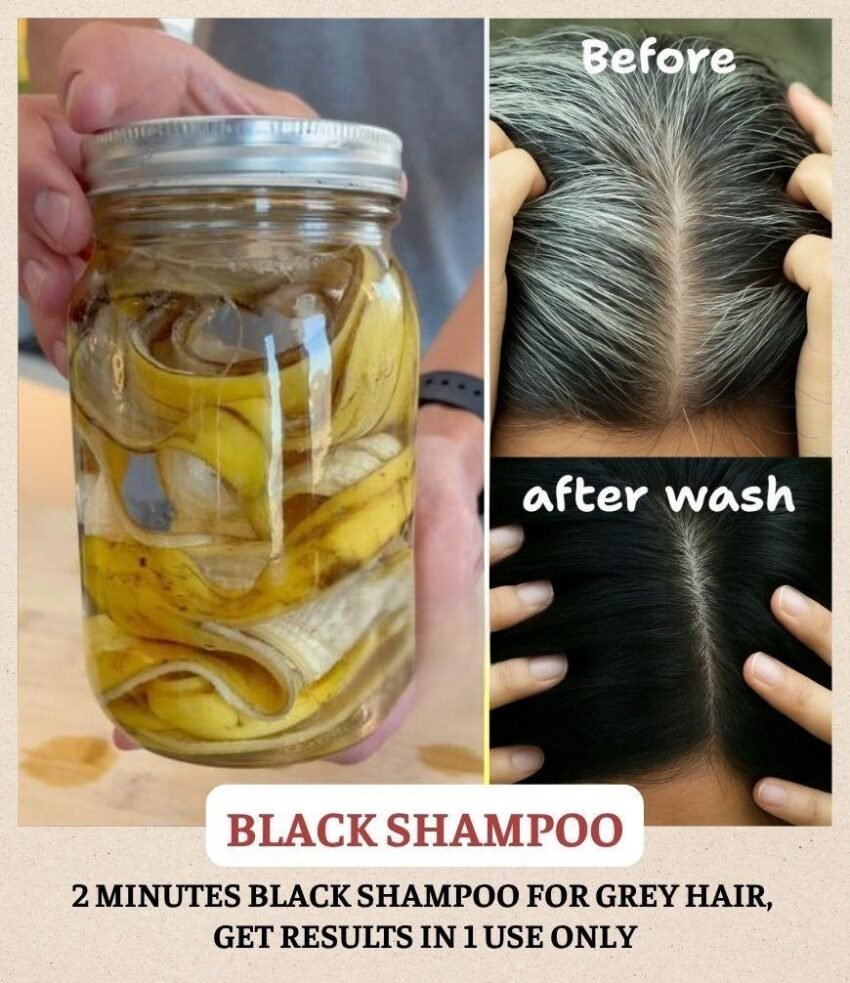
The claim that banana peels can turn gray hair back to black is a widespread and persistent folk remedy, but it is not supported by scientific evidence. Let’s separate the hopeful myth from the biological reality.
The Myth & The Claim
-
The Process: The typical DIY method involves blending banana peels into a paste, sometimes with other ingredients like coconut oil or coffee, and applying it to the hair and scalp for an extended period.
-
The Promised Result: A gradual darkening of gray hair, restoring its “natural” black or brown color.
The Biological Reality of Gray Hair
Understanding why hair turns gray is key:
-
Melanocytes: Special cells in your hair follicles produce pigment (melanin—eumelanin for brown/black, pheomelanin for red/blonde).
-
Aging & Genetics: Over time, these melanocytes become less active and eventually stop producing pigment altogether. This process is primarily determined by genetics and is largely irreversible.
-
Oxidative Stress also plays a role, damaging the melanocyte stem cells.
Once a hair follicle has stopped producing melanin, no topical natural remedy can restart that process. The color comes from within the follicle, not from the outside.
What Banana Peels Might Actually Do
While they won’t reverse grays, banana peels contain nutrients that could benefit hair in other ways:
-
Antioxidants (like lutein): May help protect the hair shaft and scalp from some environmental damage.
-
Minerals (like potassium and magnesium): Could contribute to overall hair health by moisturizing the scalp and hair, potentially making it look shinier and healthier.
-
Temporary Staining/Darkening: The tannins and other compounds in the peel might leave a subtle, temporary yellowish or dark tint on very light gray or white hair when used repeatedly, but this is a superficial stain, not true pigment restoration. It is unlikely to look like natural black hair.
The Verdict: Not an Effective Solution
-
For Reversing Gray Hair: No. Banana peels cannot reactivate melanin production. This is a biological process that topical fruit peels cannot override.
-
For Hair Health: Potentially mild benefits as a moisturizing treatment, but there are far more effective and less messy hair masks (like those with argan oil, coconut oil, or hydrolyzed proteins).
-
For Color: At best, a weak, temporary stain that may darken light grays slightly. It is not a substitute for hair dye.
What Actually Works for Gray Hair
If you wish to cover gray hair, these are proven options:
-
Temporary Rinses or Color-Depositing Shampoos/Conditioners: Wash in/wash out. Good for blending and subtle coverage.
-
Semi-Permanent or Demi-Permanent Dyes: Penetrate the hair shaft slightly, last through several washes. Less damaging than permanent dye.
-
Permanent Hair Color: Fully covers grays by lifting the hair cuticle and depositing new pigment. The most common and effective solution.
-
Professional Highlights/Lowlights: Blend grays with lighter or darker tones for a natural look.
-
Embracing the Silver: Using purple or blue shampoos to neutralize yellow tones and enhance shiny, silver hair.
The Bottom Line
While the idea of a natural, kitchen-based solution is appealing, banana peels will not turn grandma’s gray hair back to black. The change in hair color is a permanent genetic and biological shift.
The kindest and most effective approach is to:
-
Manage expectations and understand the science.
-
Help her choose a safe, effective hair coloring method if she desires a change.
-
Focus on overall hair health with good nutrition, gentle products, and scalp care to keep whatever color hair she has looking its best.
If she wants to cover her grays, a quality hair dye from the store or a salon visit will be infinitely more effective, predictable, and reliable than any fruit peel paste.