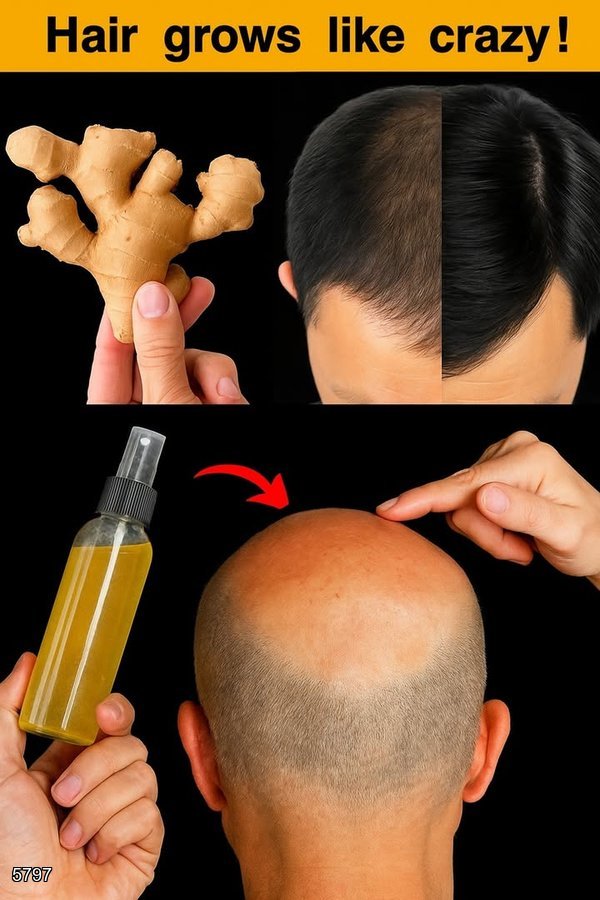
The “hidden magic” of ginger for hair is rooted in its potent natural compounds, and it has been used for centuries in Ayurvedic and traditional Chinese medicine. Here’s a breakdown of the real science, the ancient secret, and how you can use it safely and effectively.
The “Ancient Root Secret”: Why Ginger Works
Ginger’s power comes from its main bioactive compound, gingerol, along with essential oils, antioxidants, and minerals.
-
Stimulates Circulation: Ginger is a rubefacient, meaning it increases blood flow when applied topically. This delivers more oxygen and nutrients to hair follicles, which can encourage hair growth and strengthen roots.
-
Potent Anti-inflammatory: Scalp conditions like folliculitis or dandruff (often caused by a yeast called Malassezia) involve inflammation. Ginger’s anti-inflammatory properties can soothe an irritated scalp, creating a healthier environment for hair to grow.
-
Rich in Antioxidants: It fights free radicals that can damage hair follicles and contribute to aging and thinning hair.
-
Natural Antimicrobial: Helps combat scalp infections and dandruff-causing microbes.
-
Contains Magnesium, Potassium, and Zinc: Minerals vital for healthy hair structure and growth.
The “Transformation” Promises vs. Reality
-
✅ Promotes Hair Growth: Yes, primarily by improving scalp circulation and health. It’s a supporting actor, not a magic bullet for genetic baldness.
-
✅ Reduces Dandruff & Soothes Scalp: Very effective due to its anti-fungal and anti-inflammatory properties.
-
✅ Strengthens Hair: Improved follicle health can lead to less breakage and stronger strands.
-
❌ Reverses Genetic Baldness (Androgenetic Alopecia): No. It cannot block DHT, the primary hormone responsible for male/female pattern baldness.
-
❌ Overnight Miracle: Absolutely not. Consistency over weeks or months is key.
How to Use Ginger for Your Hair: Safe & Effective Recipes
⚠️ Patch Test First: Apply a small amount of your ginger mixture to your inner forearm and wait 24 hours to check for irritation. Ginger can be warming or tingly; if it burns, dilute it further.
1. The Simple Ginger Juice Scalp Treatment (Best for Growth Stimulation)
-
Grate a 2-inch piece of fresh ginger.
-
Squeeze the pulp in a cheesecloth or fine sieve to extract the juice.
-
Mix 1 tablespoon of ginger juice with 1 tablespoon of a carrier oil (like coconut, jojoba, or olive oil) to prevent dryness.
-
Massage thoroughly into your scalp for 5 minutes.
-
Leave on for 30 minutes, then shampoo out. Use 1-2 times per week.
2. Ginger & Green Tea Rinse (For Dandruff & Shine)
-
Brew a strong cup of green tea and let it cool.
-
Mix in 1 tablespoon of freshly grated ginger (or 2 tbsp ginger juice).
-
After shampooing, pour the cooled mixture through your hair as a final rinse, massaging into the scalp. Do not rinse out. Use weekly.
3. Ginger & Honey Hair Mask (For Dry, Brittle Hair)
-
Mix 2 tablespoons of ginger juice, 1 tablespoon of raw honey, and 1 tablespoon of aloe vera gel.
-
Apply from roots to ends.
-
Leave on for 20-30 minutes under a shower cap, then rinse and shampoo. Use every 1-2 weeks.
Important Cautions & Who Should Avoid It
-
Sensitive Scalp: The tingling can be too intense. Always dilute with a carrier oil or aloe vera.
-
Open Wounds/Cuts: It will sting intensely.
-
Allergy: Those allergic to ginger should avoid it.
-
Very Dry Scalp: Use only in oil-based preparations to avoid further drying.
-
Color-Treated Hair: Test on a small section first, as it may interact with color.
The Verdict
Ginger is a powerful, natural adjunct for scalp health. Its “hidden magic” lies in its ability to revitalize the scalp ecosystem—increasing blood flow, fighting inflammation, and keeping microbes in check. For hair loss due to poor scalp health, stress, or nutritional deficits, it can be transformative when used consistently. For genetic hair loss, view it as part of a holistic approach alongside proven treatments.
The true ancient secret is this: Healthy hair starts with a healthy scalp, and ginger is one of nature’s most effective tools for achieving just that.