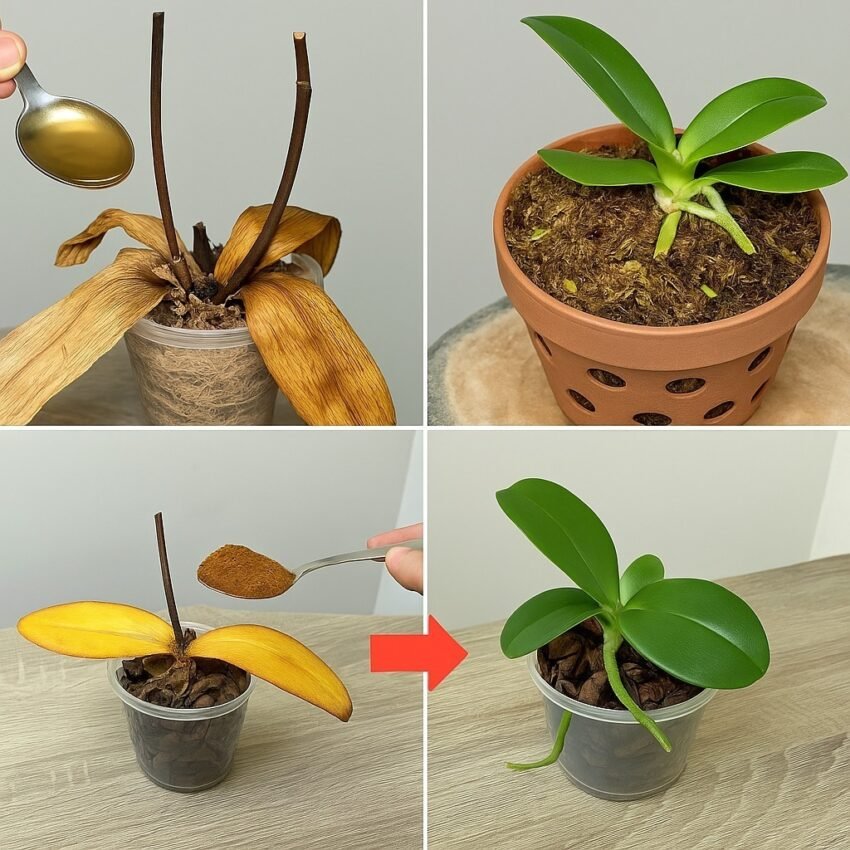
This advice appears to be referencing a horticultural “life hack” or home remedy for trying to revive an orchid (likely a Phalaenopsis, or “moth orchid”) that has lost its roots due to overwatering, rot, or dehydration.
However, “sprinkle 1 spoon” is dangerously vague. What you sprinkle makes all the difference—some substances can help, while others can finish off the plant.
Here’s a breakdown of what this likely means, what to actually do, and why.
What They Probably Mean: Using Cinnamon
The most common “spoon” advice is to use ground cinnamon (from your kitchen spice rack).
-
Why: Cinnamon is a natural antifungal and antibacterial agent. When orchid roots die and are cut away, the open “wounds” on the plant are susceptible to infection. Dusting these areas with cinnamon helps dry and sterilize the tissue, preventing further rot.
-
How: After cutting off all dead, mushy, or papery roots with sterile scissors, sprinkle a small amount of cinnamon on the cut ends and any soft spots on the stem. Let it sit for a few hours before repotting.
⚠️ Critical First Steps Before You Sprinkle Anything ⚠️
-
Unpot & Inspect: Remove the orchid from its old potting media.
-
Clean & Trim: Gently rinse the roots. Use sterilized scissors to cut away ALL dead roots. Healthy roots are firm and can be green, white, or silvery. Dead roots are mushy (rotten) or papery/brittle (desiccated).
-
Let it Dry: Allow the plant to air dry in a cool, shaded spot for several hours or overnight. This is crucial.
What NOT to Sprinkle (Common Misinformation)
-
Sugar: This can promote fungal and bacterial growth.
-
Fertilizer: Burns damaged tissue and stresses the plant. A rootless orchid cannot uptake fertilizer.
-
Soil from another pot: Introduces pathogens.
-
Aspirin or hydrogen peroxide without proper dilution/knowledge: Can damage plant cells.
The Real Process to Save a Rootless Orchid (The “Sphag & Bag” Method)
Sprinking cinnamon is just a first-aid step. To actually regrow roots:
-
After applying cinnamon, prepare a small container (like a clear plastic cup or bag).
-
Create a humid environment: Place a small handful of barely-damp (wrung-out) sphagnum moss in the bottom. Set the orchid’s base on top, ensuring no leaves are buried.
-
Bag it: Place the whole setup inside a clear plastic bag to create a “mini greenhouse.” This provides constant high humidity, which encourages new root nubs.
-
Provide indirect light and warm temperatures (70-80°F / 21-27°C).
-
Air it out every few days to prevent mold. Wait patiently—it can take weeks or months to see new root growth.
The Bottom Line
The advice “sprinkle 1 spoon” is an oversimplified fragment of orchid rescue lore. Do not sprinkle anything randomly.
Correct Action Plan:
-
Remove dead material.
-
Sterilize cuts with cinnamon.
-
Create a warm, humid environment for the orchid to regrow roots.
-
Be patient—orchids recover very slowly.
If your orchid has no roots but still has at least one healthy leaf, there is hope. But the key is sterility, humidity, and time—not a magic powder. Good luck