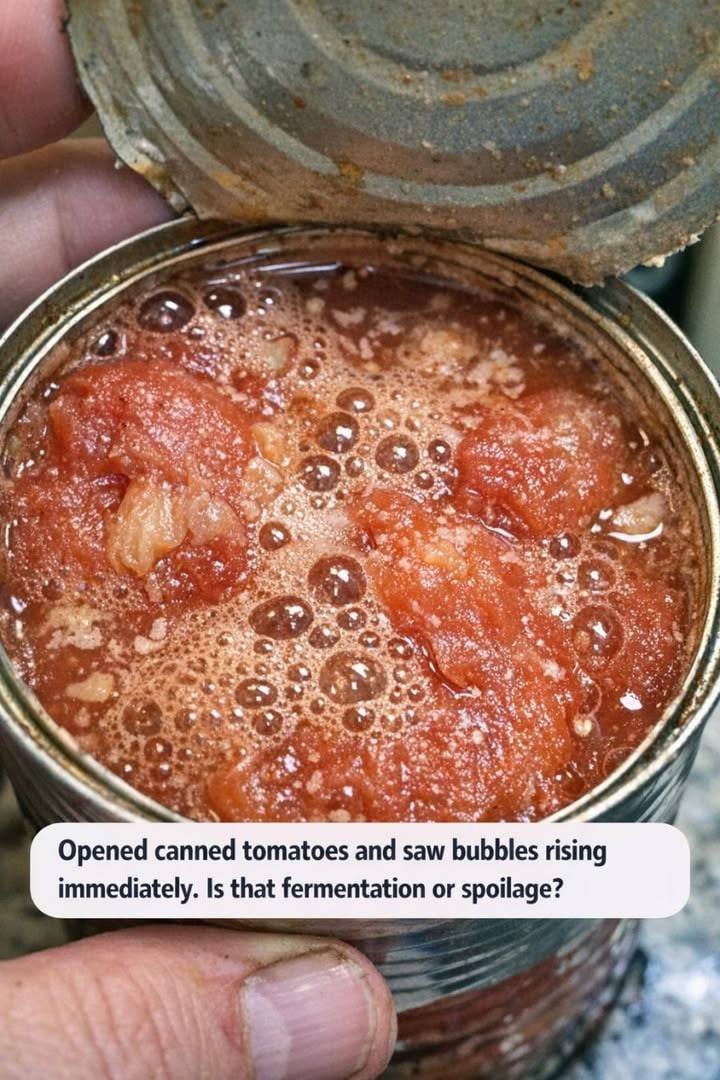
Great observation! This is a very common concern when opening canned goods. In almost all cases, the bubbles rising from a freshly opened can of tomatoes are perfectly normal and safe. They are not a sign of fermentation or spoilage.
Here’s a detailed breakdown of what’s happening:
What Those Bubbles Usually Are (The Harmless Explanations)
-
Release of Trapped Air/CO₂ from Processing: During the high-heat canning process, air and natural gases trapped in the tomato pulp and juice are compressed. When you open the can and release the pressure, these gases quickly escape, forming bubbles. It’s like opening a carbonated drink, but much milder.
-
Acid Reaction with the Can’s Lining: Tomatoes are acidic. This acid can react very slightly with the protective epoxy lining of the can over time, producing a tiny, harmless amount of gas.
-
Agitation: If you shook or moved the can before opening, you introduced air into the liquid, which will bubble out when the pressure is released.
When Bubbles Could Signal a Problem (Rare)
True spoilage in a commercially canned product is extremely rare due to strict safety standards. However, you should be concerned if you see bubbles combined with other clear warning signs:
-
The can is severely damaged: Deep rust, dents on the seams, bulging, or leaking.
-
Liquid spurts out with force when opened.
-
Offensive, sour, or rotten odor (tomatoes should smell tangy and bright, not foul).
-
Unusual appearance: Mold, cloudiness, unnatural color, or a slimy texture.
-
The bubbles are persistent and continuous (like in a soda), rather than a quick release upon opening.
These signs could indicate the growth of spoilage bacteria or, in extremely rare cases, the presence of Clostridium botulinum, the bacteria that causes botulism. Bulging cans are the most critical red flag for botulism risk.
The Safety Test: Trust Your Senses
For a commercially canned product like tomatoes, follow this simple checklist upon opening:
-
Inspect the Can: Was it undamaged and not bulging before opening?
-
Listen for the “Pop”: Did the lid depress normally? (A hiss or spurting liquid is bad).
-
Smell It: Does it smell like fresh, tangy tomatoes?
-
Look at It: Is the color normal? Are there no signs of mold, froth, or unnatural cloudiness?
-
Feel It: Is the texture typical for canned tomatoes, not slimy or mushy beyond normal?
If the can passed the pre-opening inspection and the contents pass the smell/look test, those initial bubbles are almost certainly just released gases and the tomatoes are perfectly safe to eat, cook with, and enjoy.
What About Home-Canned Tomatoes?
For home-canned goods, you must be much more cautious. The risk of improper processing is higher. If a home-canned jar of tomatoes bubbles actively when opened, shows any spurting, or has an off smell, do not taste it. Discard it safely (boil the contents for 10 minutes before disposing to destroy any potential toxins, then dispose of the jar and lid).
Bottom Line
Don’t let the bubbles scare you away. They are a standard physical reaction in a sealed, acidic environment. Rely on the more reliable spoilage indicators: can integrity, smell, and appearance. When in doubt, especially with home-canned goods, the safest rule is: “When in doubt, throw it out.” But for a intact store-bought can that smells and looks fine, bubble away—your pasta sauce is waiting