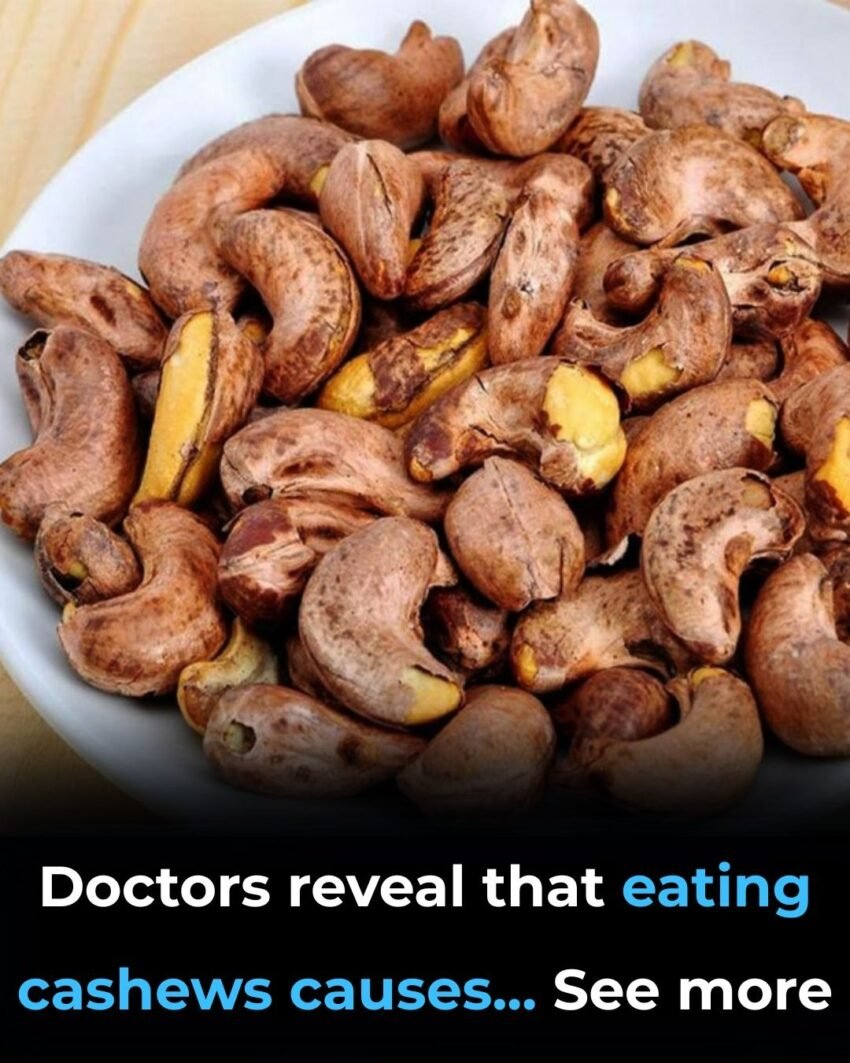
Let’s clarify what doctors and nutrition research actually say about cashews:
1. Cashews are nutrient-dense
Cashews contain healthy fats (mostly monounsaturated), protein, magnesium, copper, zinc, and antioxidants.
They can support heart health, bone health, and immune function when eaten in moderation.
2. Possible concerns doctors might mention
-
Calorie density: Eating large amounts regularly can lead to weight gain because they’re high in calories.
-
Allergies: Tree nut allergies are common, and cashews can trigger severe reactions in some people.
-
Oxalate content: Cashews contain oxalates, which in very high amounts could contribute to kidney stone formation in susceptible individuals.
-
Salted/flavored varieties: Often high in sodium or added oils/sugars — the processing matters.
3. “Causes” is too strong a word
No reliable evidence shows moderate cashew intake causes harm to the general population. In fact, observational studies often link nut consumption to lower risks of heart disease and diabetes.
4. The likely “doctors reveal” headline origin
Sometimes media reports highlight a single case study (e.g., someone eating extremely large quantities and having a problem) or discuss potential allergens. This can be sensationalized into “cashews cause X.”
Conclusion
For most people, eating a handful of cashews daily as part of a balanced diet is beneficial, not harmful. Anyone with specific health conditions (kidney issues, nut allergies, etc.) should consult their doctor for personalized advice.