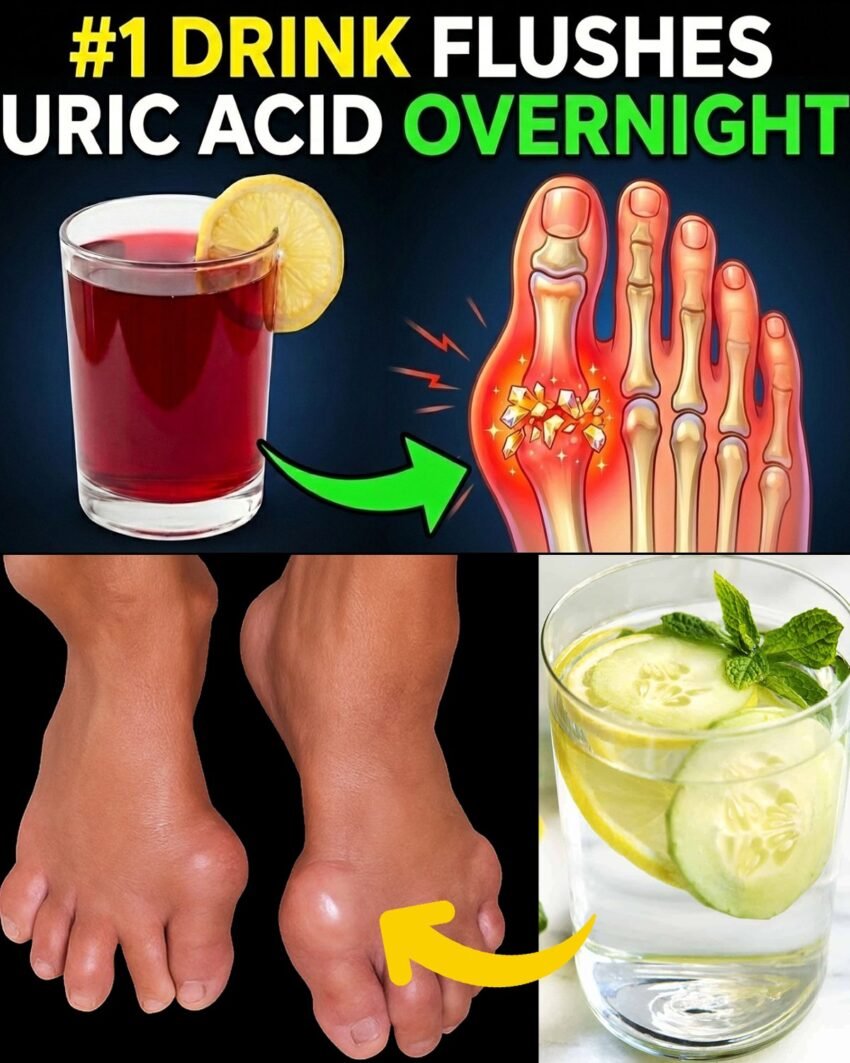
This is a highly dangerous and misleading claim. Any headline or article that advises you to “stop taking pills” for a medical condition like high uric acid (which can lead to gout, kidney stones, and kidney damage) should be treated with extreme skepticism and viewed as potentially harmful medical misinformation.
Let’s break down the reality:
🚨 The Critical Danger of Such Claims
-
Medical Negligence: Telling someone to stop prescribed medication (like allopurinol or febuxostat) can lead to a painful gout flare, permanent joint damage, kidney stones, or progressive kidney disease. Medication changes should only be made under a doctor’s supervision.
-
False Hope: It suggests a simple “drink” can replace a targeted pharmaceutical intervention that controls a complex metabolic process.
-
Lack of Context: High uric acid (hyperuricemia) often requires lifelong management. A drink cannot “dissolve” uric acid crystals already deposited in joints or kidneys; it can only support the body’s natural elimination processes.
🍵 What the “Drink” Likely Is & Its Actual Role
The promoted drink is almost certainly a tart cherry juice, apple cider vinegar, lemon water, or bicarbonate-based concoction. Here’s what the science actually says about these:
-
Tart Cherry Juice: Some studies show it can modestly lower uric acid levels and reduce gout flare frequency due to anti-inflammatory compounds and anthocyanins. It’s a dietary adjunct, not a cure.
-
Lemon Water & Apple Cider Vinegar: The theory is that their citric acid/vinegar makes urine more alkaline, helping the kidneys excrete uric acid. Evidence is anecdotal and very weak. They are harmless in moderation for most people but can erode tooth enamel.
-
Baking Soda (Sodium Bicarbonate) Water: This can alkalize urine and aid uric acid excretion. However, it is high in sodium, can raise blood pressure, and must be used with extreme caution and medical guidance, especially for those with heart or kidney conditions.
Their real role: These can be part of a supportive dietary strategy alongside medication, not a replacement for it.
✅ Evidence-Based Management of High Uric Acid & Gout
A comprehensive approach under a doctor’s care is essential.
1. PRESCRIBED MEDICATIONS (The Foundation of Control):
-
Urate-Lowering Therapy (ULT): Allopurinol is the first-line, lifelong medication for most patients. It reduces the production of uric acid.
-
Anti-Inflammatories for Flares: Colchicine, NSAIDs, or corticosteroids to manage acute attacks.
-
Never stop these medications without consulting your doctor.
2. DIETARY & LIFESTYLE CHANGES (Crucial Support):
-
Hydration: Drink plenty of water (2-3 liters/day) to help kidneys flush out uric acid. This is the single most important “drink.”
-
Limit High-Purine Foods: Reduce intake of red meat, organ meats, certain seafood (sardines, mussels), and yeast extracts.
-
Limit Fructose & Alcohol: Sugary drinks and alcohol (especially beer) significantly raise uric acid.
-
Eat More: Low-fat dairy, complex carbohydrates, vegetables (even previously feared ones like spinach and mushrooms are now considered okay in moderation for most), and coffee.
3. SUPPLEMENTAL SUPPORT (Discuss with Doctor):
-
Vitamin C: May have a mild uricosuric (uric acid-excreting) effect.
-
Tart Cherry Extract: As mentioned, some supportive evidence.
📞 When to See a Doctor
-
If you have sudden, severe joint pain (especially in the big toe), swelling, and redness.
-
For diagnosis and management of high uric acid levels.
-
Before making any changes to your medication or starting any new supplement regimen.
Bottom Line
DO NOT stop taking prescribed uric acid medication based on an online article or “miracle drink” claim. That drink is, at best, a minor supportive player in a much larger, medically supervised treatment plan.
Effective management requires:
-
Doctor-Supervised Medication
-
Adequate Water Intake
-
Dietary Modifications
-
Healthy Lifestyle Choices
Always consult a rheumatologist or your primary care physician for personalized advice. Your health is too important to risk on unproven, sensationalized alternatives.