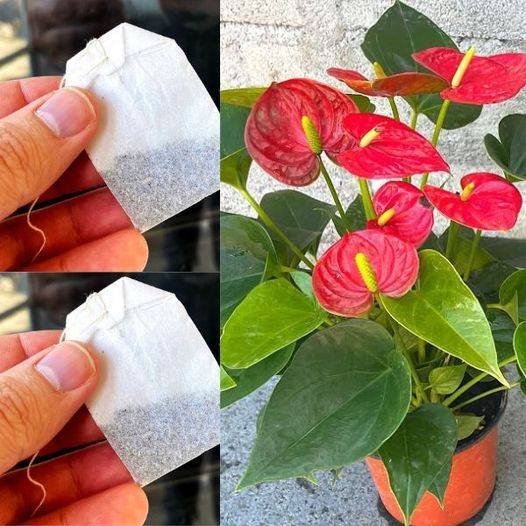
This is a popular gardening “hack,” but it’s important to understand both its potential benefits and significant drawbacks before applying it to your Anthurium.
The Theory Behind the Hack
Used tea bags contain small amounts of nitrogen and tannic acid. The idea is that:
-
Nitrogen could promote green, leafy growth.
-
Tannic acid could slightly lower soil pH, which Anthuriums (preferring slightly acidic soil, pH 5.5-6.5) might appreciate.
-
The organic matter could improve soil structure as it decomposes.
The Potential Risks (Why It’s Often Not Recommended)
The risks generally outweigh the minor benefits, especially for a sensitive plant like an Anthurium.
-
Fungus Gnats & Mold: A damp, decomposing tea bag on the soil surface is a perfect breeding ground for fungus gnats and mold. This is the most common and annoying outcome.
-
Inconsistent & Weak Fertilizer: The nutrient content in a used tea bag is extremely low and varies wildly by tea type. It’s not a balanced or reliable fertilizer.
-
Altered Soil Chemistry: Over time, tannins can alter soil pH and chemistry in unpredictable ways. Anthuriums are epiphytes in nature and prefer a very airy, well-draining mix; decomposing material can compact soil and reduce aeration.
-
Risk of “Sour” Soil: If tea bags accumulate, they can make the soil too acidic or create anaerobic conditions harmful to roots.
-
Attracts Pests: The organic matter can attract other unwanted soil pests.
Best Practices for Encouraging Anthurium Blooms
If your Anthurium isn’t flowering, address its core needs first. Blooms are a sign of a happy, healthy plant.
| What Anthuriums Need to Bloom | How to Provide It |
|---|---|
| 1. Bright, Indirect Light | This is THE MOST IMPORTANT factor. Place near an east-facing window or a few feet back from a south/west window. Low light = foliage only. |
| 2. Proper Watering | Water thoroughly when the top 1-2 inches of soil are dry. They hate soggy feet. Use well-draining, chunky soil (orchid mix with added perlite is great). |
| 3. High Humidity (>60%) | Use a humidifier, a pebble tray, or group plants together. Dry air stresses the plant. |
| 4. Warm Temperatures | Keep between 70-85°F (21-29°C). Avoid drafts and cold snaps. |
| 5. Balanced, Weak Fertilizer | Use a balanced, water-soluble fertilizer (e.g., 1-1-1 or 3-1-2 ratio) diluted to 1/4 or 1/2 strength. Apply every 4-6 weeks during the growing season (spring/summer). A high-phosphorus “bloom booster” is NOT necessary and can harm the plant if overused. |
| 6. Slightly Root-Bound | They often bloom more willingly when slightly root-bound. Don’t over-pot. |
If You Still Want to Use Tea… (A Safer Alternative)
If you wish to use tea as a very occasional, mild additive:
-
Use only plain, unflavored black or green tea. No herbs, fruits, or additives.
-
Compost it first. Add the used tea leaves to your compost bin to break down fully, then use the finished compost in your potting mix.
-
As a rare “tea water” rinse: Steep a used bag in a gallon of water for 24 hours, remove the bag, and use the cooled, weak tea to water your plant once every few months. This minimizes mold risk.
Bottom Line
The teabag-on-soil method is not an effective or recommended way to fertilize Anthuriums or encourage blooms. It’s more likely to cause pest and mold problems.
For a blooming Anthurium, focus on perfecting its core care: bright indirect light, consistent warmth, high humidity, and a balanced, diluted fertilizer during active growth. A happy Anthurium will reward you with its beautiful, long-lasting flowers (which are actually modified leaves called spathes) on its own schedule.