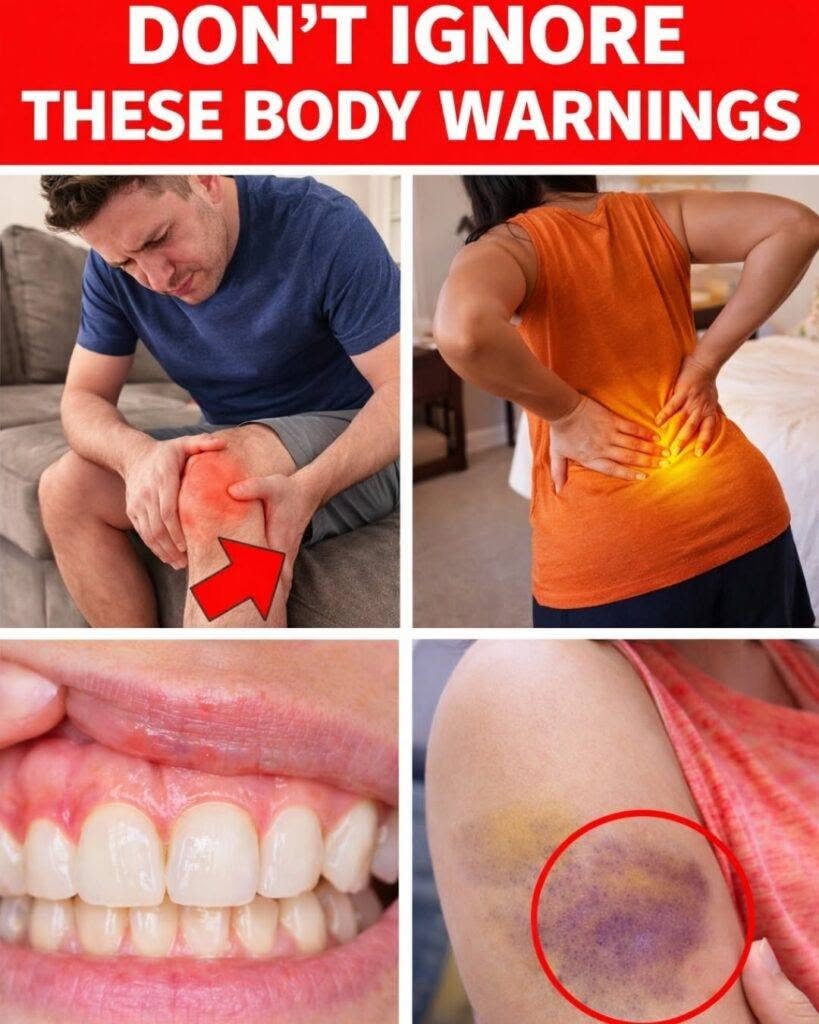
Here are 7 subtle physical signs that can indicate specific nutrient deficiencies in people over 60, along with what each might mean.
1. Cracking at the corners of the mouth (Angular Cheilitis)
-
Possible gaps: B vitamins (especially B2, B3, B12), iron, or zinc.
-
Why after 60: Reduced stomach acid impairs B12 absorption; poor dentition can change chewing habits, reducing intake of meats and whole grains.
2. Smooth, shiny, or red tongue (Glossitis)
-
Possible gaps: Folate, B12, iron, or niacin.
-
Why after 60: Atrophic gastritis (common in older adults) limits B12 and iron absorption; medications like proton pump inhibitors worsen this.
3. Unexplained night blindness or poor dark adaptation
-
Possible gaps: Vitamin A or zinc (needed to transport vitamin A to the retina).
-
Why after 60: Liver stores of vitamin A can decline; zinc absorption decreases with age. This is often missed because vision changes are blamed on “normal aging.”
4. Easy bruising with no trauma
-
Possible gaps: Vitamin C, vitamin K, or both.
-
Why after 60: Older adults may eat fewer fruits/vegetables due to dental issues, taste changes, or medication side effects (e.g., warfarin interacts with vitamin K).
5. Bone pain or muscle weakness not tied to arthritis
-
Possible gaps: Vitamin D, calcium, or magnesium.
-
Why after 60: Skin synthesis of vitamin D drops by ~75% by age 70; kidney conversion of vitamin D to its active form also declines. This can cause osteomalacia, which mimics arthritis pain.
6. Burning, tingling, or “pins and needles” in feet
-
Possible gaps: B12, B6, vitamin E, or thiamine (B1).
-
Why after 60: Gastric atrophy, long-term metformin use (common in diabetes), or diuretics can deplete these. Peripheral neuropathy is often misattributed to age or diabetes without checking actual nutrient levels.
7. Spoon-shaped, brittle, or ridged nails (Koilonychia)
-
Possible gaps: Iron (most common), sometimes copper or protein.
-
Why after 60: Chronic low-grade blood loss (e.g., from NSAIDs, colon polyps) or poor iron intake due to reduced red meat consumption. Iron deficiency without anemia is frequently overlooked in older adults.
Important note
These signs are clues, not diagnoses. Many can also be caused by medications, diabetes, thyroid disorders, or kidney disease. If you or someone you care for notices these, ask a doctor for simple blood tests: serum B12, methylmalonic acid (more sensitive B12 marker), ferritin, 25(OH)D, zinc, and folate — not all are on a standard CBC or metabolic panel.