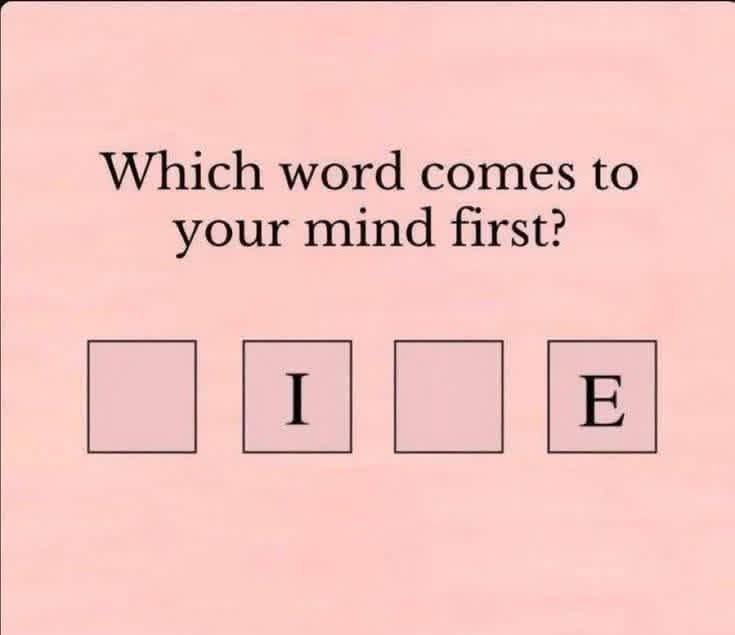
Visual puzzles are a broad and fascinating category! They challenge your perception, pattern recognition, and sometimes even your cultural knowledge, all without relying on words.
Since I can’t see the puzzle you’re referring to, I’ll provide a comprehensive guide to the most common types and strategies for solving them.
🔍 Common Types of Visual Puzzles
-
Spot the Difference: Two nearly identical images with subtle discrepancies.
-
Hidden Object: A detailed illustration where you must find a list of items concealed within the scene.
-
Optical Illusions: Images that play tricks on your brain, making you see motion, distortion, or impossible shapes (e.g., the famous “young woman/old woman” illusion).
-
Rebus Puzzles: Pictures representing words or parts of words (e.g., a picture of an eye, a heart, and a U = “I love you”).
-
Visual Riddles: A single, often cryptic image that you must interpret to answer a question (e.g., a clock showing 2:50 with the question “What time is it?” might be answered “Ten to three”).
-
Pattern Recognition/Sequence: A series of shapes, symbols, or colors where you must deduce the next in the sequence.
-
Jigsaw Puzzles: Physical or digital puzzles where interlocking pieces form a complete image.
-
Mazes: Finding the correct path from start to finish.
-
Impossible Objects/ “What’s Wrong Here?”: Illustrations containing logical or physical impossibilities (e.g., a clock with numbers out of order, shadows pointing the wrong way).
-
Stereograms (Magic Eye): 3D images hidden within a patterned 2D image, requiring you to “unfocus” your eyes.
🧩 General Solving Strategies
-
Systematic Scanning: For “spot the difference” or hidden object puzzles, scan the image in rows or quadrants. Don’t let your eyes wander randomly.
-
Think Laterally & Symbolically: In rebus puzzles, consider homophones (words that sound like others), positional clues (above, below, inside), and symbolic meanings.
-
Change Your Perspective: For optical illusions and “what’s wrong” puzzles, literally step back, squint, or look at the image from a different angle. Sometimes rotating it helps.
-
Break Down Sequences: For pattern puzzles, analyze each element separately—color, shape, size, orientation, position. Look for alternating, progressing, or rotating patterns.
-
Context is Key: In hidden object scenes, the theme (e.g., “beach day,” “medieval kitchen”) gives huge clues about where objects might be camouflaged.
💡 If You Want to Describe Your Specific Puzzle
Since I can’t see it, the best way for me to help you solve it is if you describe it in as much detail as possible.
Please tell me:
-
What do you see? (Describe the main image, shapes, colors, patterns).
-
What is the task? (e.g., “find 5 differences,” “what does this spell?”, “what comes next?”, “what’s wrong here?”).
-
Any text or numbers present in the puzzle.
Example Description: *”I see a black-and-white drawing of a living room. There’s a cat on a rug, a bookshelf, and a window. The instruction says ‘Find the 5 snakes hidden in this room.'”*
With a description like that, I can suggest where a clever artist might hide a snake-like shape (in the pattern of the rug, as a book spine, in the curtain cord, etc.).
Ready when you are—describe your visual puzzle, and let’s solve it together! 🕵️♀️