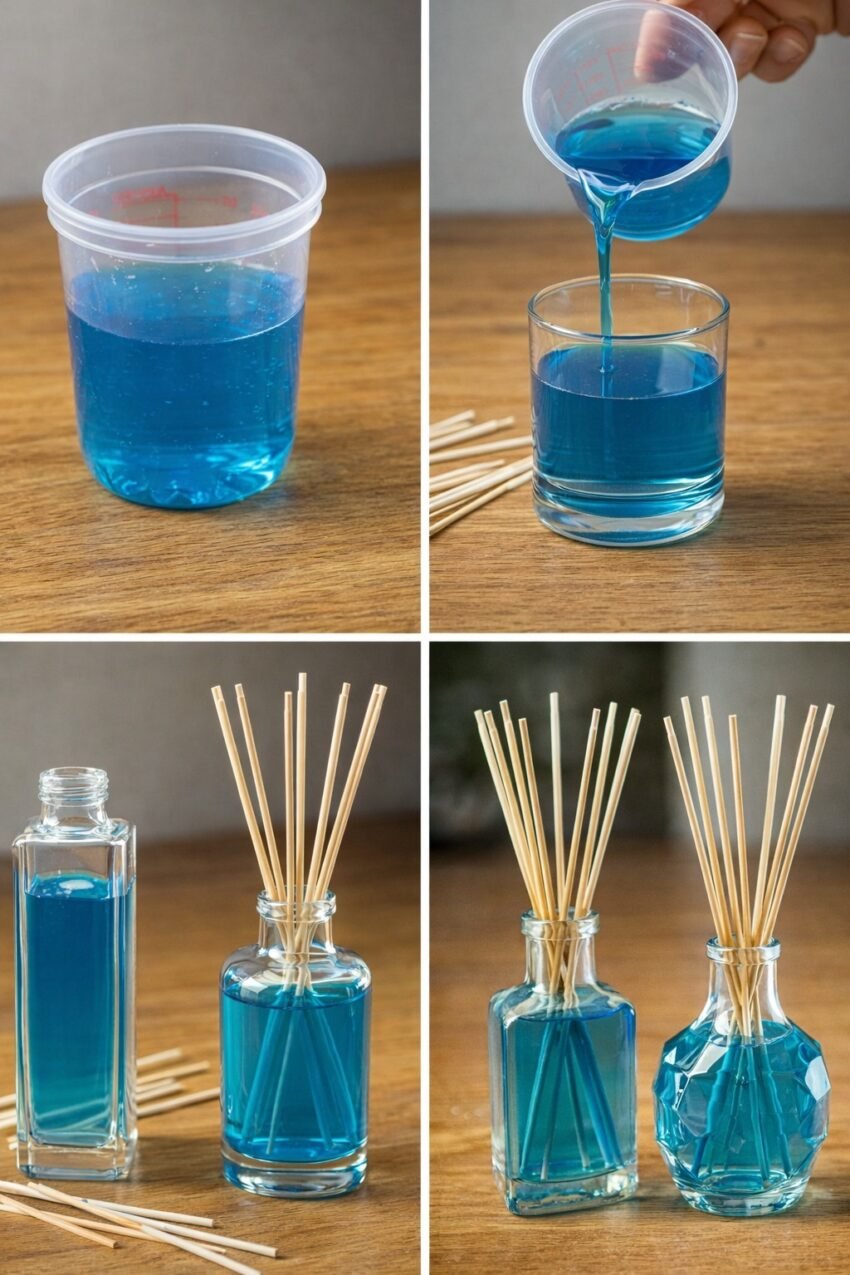
Excellent! DIY reed diffusers are a simple, customizable, and safe way to add continuous fragrance to a room without heat or flames. Here’s a detailed guide based on common methods.
How a Reed Diffuser Works
Reed diffusers work through capillary action. The reeds (rattan sticks are best) absorb the scented oil mixture and act as a wick, allowing the fragrance to passively evaporate into the air. They provide a steady, subtle scent.
Basic DIY Reed Diffuser Recipe
You will need:
-
A Glass Bottle or Vase: Slim neck preferred to slow evaporation.
-
Rattan Reed Sticks: (Not bamboo). Their porous structure is essential for wicking.
-
Carrier Oil: Safflower, sweet almond, fractionated coconut, or mineral oil. Lightweight oils wick best.
-
Essential Oils or Fragrance Oils: Essential oils are natural; fragrance oils are often stronger and more diverse.
-
High-proof Alcohol (Optional but Recommended): Rubbing alcohol (at least 70%) or vodka. This helps thin the oil, improving wicking and acting as a dispersant.
Classic Ratio Formula:
-
1/4 cup carrier oil (approx. 60 ml)
-
1/4 cup alcohol (approx. 60 ml) – *For an alcohol-free version, use all oil (1/2 cup total). Note: It will wick slower.*
-
50-75 drops of essential/fragrance oils (adjust for strength)
Instructions:
-
Mix: In a bowl or measuring cup, combine the carrier oil and alcohol (if using). Stir gently.
-
Add Scent: Add your chosen essential oils. Stir well to blend thoroughly.
-
Pour & Place: Pour the mixture into your clean, dry bottle.
-
Insert Reeds: Place 5-10 rattan reeds into the bottle. More reeds = stronger scent throw.
-
Let it Soak: Allow 1-2 hours for the reeds to fully saturate.
-
Flip & Scent: Flip the reeds to expose the saturated ends. The scent will begin to diffuse. Flip the reeds every few days or whenever you want to refresh the scent.
Popular Scent Blends (Using Essential Oils)
-
Clean & Fresh: 30 drops Lemon + 20 drops Lime + 15 drops Rosemary
-
Calming Spa: 25 drops Lavender + 20 drops Bergamot + 15 drops Cedarwood
-
Warm & Cozy: 30 drops Sweet Orange + 20 drops Cinnamon Bark + 15 drops Clove
-
Uplifting: 25 drops Grapefruit + 20 drops Peppermint + 15 drops Eucalyptus
🌟 Pro Tips for Success
-
Pre-soak Reeds: Before initial use, soak reeds in the mixture for 15 minutes for faster priming.
-
Choose the Right Reeds: Rattan sticks have perfect natural channels. Decorative reeds often don’t wick well.
-
Control Strength: Use more reeds or a higher fragrance ratio for a stronger scent. Place the diffuser in a high-traffic, low-draft area for best dispersion.
-
Refresh: The scent will fade in 3-6 weeks. You can top up with more oil mixture or replace it entirely. Replace reeds every refill for maximum efficiency.
-
Safety: Keep out of reach of pets and children. Some essential oils are toxic to pets (especially cats)—research before using.
Troubleshooting Common Issues
-
No Scent/Weak Scent:
-
Reeds aren’t saturated—wait longer or flip them.
-
Not enough fragrance oil—add more.
-
The room is too large or drafty.
-
Reeds are old or clogged—replace them.
-
-
Mixture Evaporates Too Fast:
-
Use a bottle with a narrower neck.
-
Use fewer reeds.
-
Ensure it’s not in direct sunlight or near a heat vent.
-
-
Oil is Too Thick & Won’t Wick:
-
Add more alcohol to thin the mixture (a few tablespoons at a time).
-
Switch to a lighter carrier oil like fractionated coconut or safflower oil.
-
Why Make Your Own?
-
Cost-Effective: Much cheaper than store-bought refills.
-
Customizable: Create unique scents that match your mood or season.
-
Control Ingredients: Avoid synthetic chemicals if you prefer all-natural oils.
-
Aesthetic Choice: Use any beautiful bottle you like.
Making your own reed diffuser is a quick, satisfying project that yields a personalized home fragrance. Enjoy experimenting with your favorite scents!