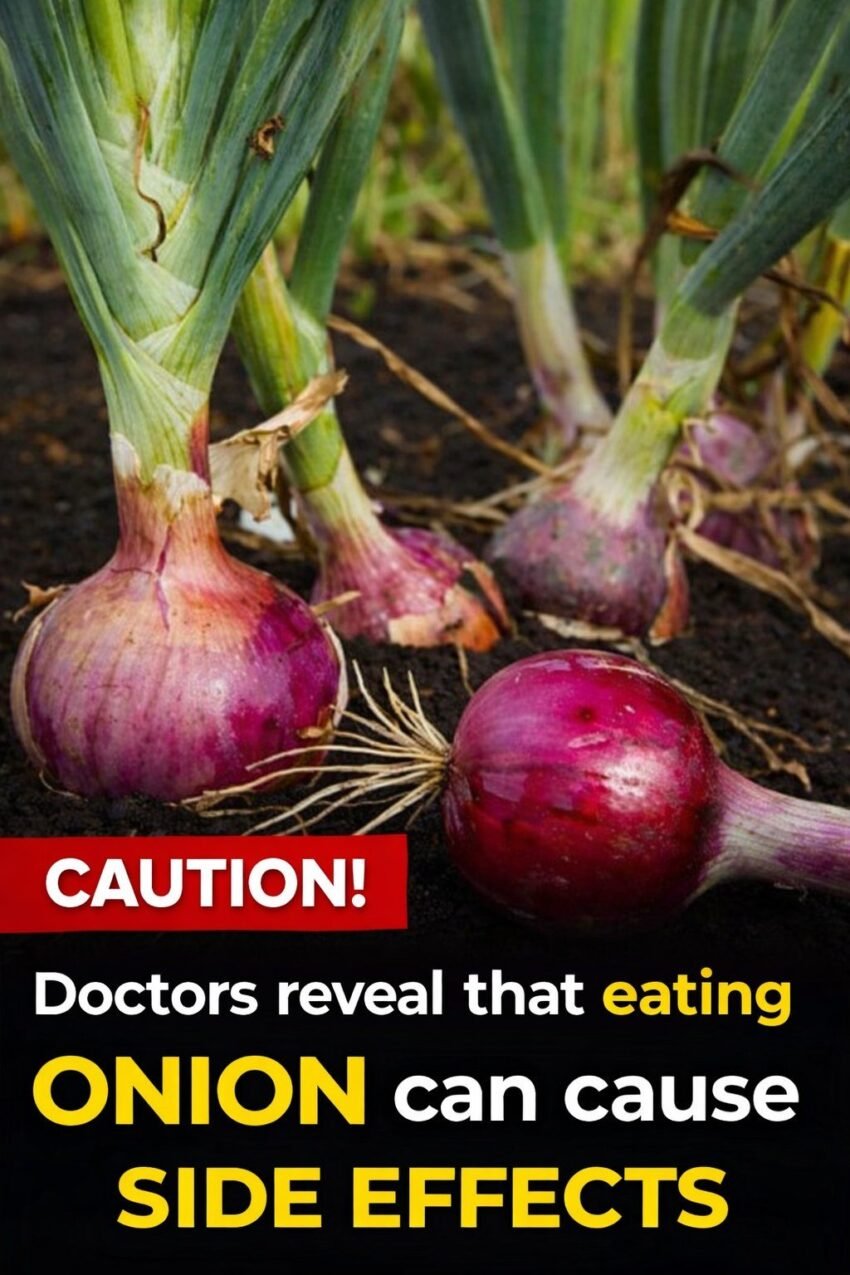
That’s a very important point to clarify. Yes, while onions are incredibly healthy and a staple in kitchens worldwide, doctors and nutritionists confirm they can cause side effects for some people, especially when consumed in large quantities.
It’s a perfect example of the principle that “the dose makes the poison”—even for healthy foods.
Here are the key side effects, who should be cautious, and the context.
Common Side Effects of Onions
-
Digestive Distress (The Most Common Issue)
-
Cause: Onions are rich in FODMAPs (specifically fructans), a type of carbohydrate that is poorly absorbed in the small intestine. They ferment in the colon, causing gas, bloating, cramping, and diarrhea.
-
Who’s Affected: People with IBS (Irritable Bowel Syndrome) or a general sensitivity to FODMAPs. For them, even small amounts can trigger symptoms.
-
-
Heartburn and Acid Reflux (GERD)
-
Cause: Onions are a known trigger food for many people with GERD. They can relax the lower esophageal sphincter, allowing stomach acid to flow back up.
-
Note: Cooking onions can reduce this effect for some, but not all.
-
-
Bad Breath and Body Odor
-
Cause: Sulfur compounds in onions are absorbed into the bloodstream, released through the lungs (breath) and pores (skin odor). Brushing only masks it temporarily until the compounds are fully metabolized.
-
-
Eye Irritation
-
Cause: Cutting onions releases a gas called propanethial S-oxide, which reacts with the water in your eyes to form sulfuric acid, causing a stinging sensation and tears. This is a temporary, mechanical effect, not an allergy.
-
-
Potential for Allergic Reactions (Rare)
-
Symptoms: While uncommon, true onion allergies can cause skin rashes, itching, swelling, or even anaphylaxis in severe cases. This is different from an intolerance.
-
-
Blood-Thinning Effect
-
Cause: Onions contain a flavonoid called quercetin, which has mild antiplatelet (blood-thinning) properties.
-
Who Should Be Cautious: Individuals on blood-thinning medications (like warfarin, aspirin, or clopidogrel) should not consume unusually large, medicinal amounts of raw onions without discussing it with their doctor, as it could theoretically increase bleeding risk. Normal culinary use is generally safe.
-
-
Interactions with Certain Medications (Theoretical)
-
The same compounds that affect blood clotting may have theoretical interactions with other medications. Always discuss major dietary changes with a doctor if you are on chronic medication.
-
Who Should Be Especially Careful?
-
People with IBS or FODMAP intolerance.
-
Individuals with diagnosed GERD or chronic heartburn.
-
Those preparing for surgery (may be advised to avoid large amounts due to blood-thinning effect).
-
People on specific blood-thinning medications (should maintain consistent intake, not suddenly eat huge amounts).
-
Anyone with a known allergy to onions or other alliums (garlic, leeks, chives).
Minimizing Side Effects
-
Cook Them Well: Cooking, especially caramelizing or boiling, breaks down some of the FODMAPs and sulfur compounds, making onions easier to digest for many.
-
Use the Green Parts (for Leeks & Scallions): The green tops of spring onions and leeks are lower in FODMAPs than the white bulbs.
-
Try Different Types: Shallots and the white parts of scallions are very high in FODMAPs. A small amount of garlic-infused oil (where the solids are removed) can provide flavor without the FODMAPs.
-
Practice Good Oral Hygiene: To combat breath, brush, floss, and use a tongue scraper after eating. Chewing parsley or an apple can also help.
The Bottom Line from a Medical Perspective
Doctors and dietitians universally agree: For the vast majority of people, the health benefits of onions (anti-inflammatory, heart-healthy, antioxidant-rich) far outweigh the minor side effects.
The key takeaways are:
-
Onions are not harmful to the general population.
-
They are a known trigger food for specific medical conditions (IBS, GERD).
-
Like any food, they should be consumed in moderation as part of a varied diet.
-
Individuals with the conditions listed above should work with a healthcare professional to determine their personal tolerance levels.
So, you don’t need to fear onions, but it’s wise to listen to your body and adjust your intake if you experience consistent discomfort.