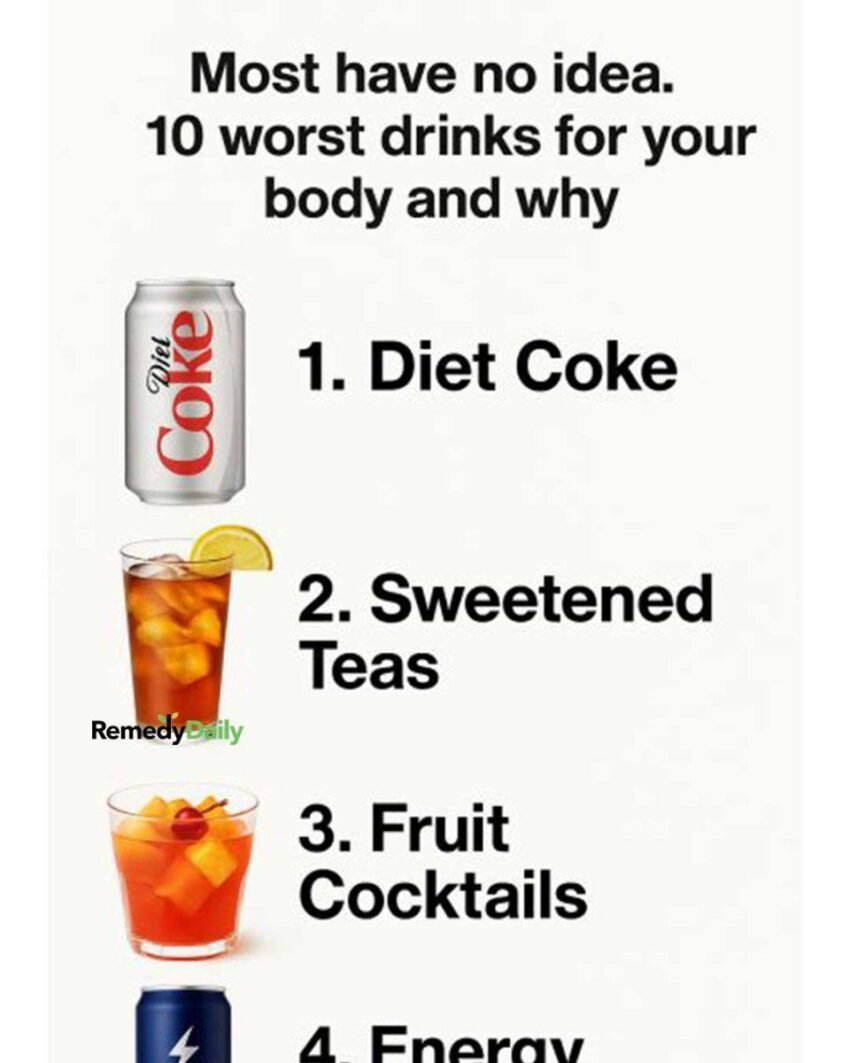
You’re right—many people are unaware of just how harmful certain popular drinks can be. These beverages often deliver a massive dose of sugar, artificial chemicals, empty calories, and other compounds that can damage your health over time.
Here are the 10 worst drinks for your body, based on nutrition science, and exactly why you should minimize or avoid them.
1. Regular Soda (Cola, Lemon-Lime, etc.)
-
Why it’s terrible: Liquid candy. A single 12-oz can has 39+ grams of sugar (about 10 teaspoons), often from high-fructose corn syrup. This causes rapid blood sugar spikes, promotes fat storage (especially visceral fat), drives insulin resistance, and is directly linked to type 2 diabetes, obesity, and fatty liver disease. The phosphoric acid can also leach calcium from bones.
2. Diet Soda (Artificially Sweetened)
-
Why it’s terrible: Tricks your body. While it has zero calories, studies link regular consumption to increased sugar cravings, altered gut bacteria, and a higher risk of metabolic syndrome and type 2 diabetes. The intense sweetness can desensitize your palate to natural sugars, making healthy foods like fruit taste bland. Some people also experience “rebound hunger” after drinking it.
3. Energy Drinks (Red Bull, Monster, etc.)
-
Why it’s terrible: A dangerous stimulant cocktail. They combine high doses of caffeine (often equivalent to several cups of coffee) with large amounts of sugar (or artificial sweeteners) and unregulated “proprietary blends” of herbs like guarana (more caffeine) and taurine. This can cause heart palpitations, anxiety, insomnia, high blood pressure, and has been linked to emergency room visits for heart issues. The sugar crash after the caffeine wears off is severe.
4. Sweetened Coffee Drinks (Frappuccinos, Iced “Coffee” Desserts)
-
Why it’s terrible: A dessert disguised as a drink. A large Mocha Frappuccino can pack 500+ calories and 70+ grams of sugar—more than a can of soda and a slice of cake combined. The fat is often from low-quality syrups and whipped cream. This transforms a potentially healthy black coffee into a major contributor to weight gain and metabolic dysfunction.
5. Fruit Juice (Even 100% “Natural”)
-
Why it’s terrible: Nature’s soda. When fruit is juiced, the beneficial fiber is removed, leaving a concentrated shot of sugar (fructose) that hits your liver almost as fast as a sugary soda. A 12-oz glass of orange juice has 36 grams of sugar—as much as a can of Coke. It lacks the fiber that slows absorption and signals fullness when you eat whole fruit.
6. Sweetened “Health” Smoothies (Jamba Juice, bottled versions)
-
Why it’s terrible: Sugar overload in disguise. Commercial smoothies are often made with fruit juice, sorbet, sherbet, or sweetened yogurt as a base, making them high-sugar, low-protein/fiber traps. A large can easily contain 80-100 grams of sugar—the same as eating 5-6 bananas at once, without the satiety.
7. Sports & Electrolyte Drinks (Gatorade, Powerade)
-
Why it’s terrible: Unnecessary for most people. Designed for endurance athletes doing intense exercise for 60+ minutes, they contain high amounts of sugar and sodium. If you’re not at that level, you’re drinking extra sugar and salt your body doesn’t need. The “replenishment” marketing is effective but misleading for casual use.
8. Pre-Made Alcoholic Cocktails & Mixers (Margaritas, Daiquiris in a bottle)
-
Why it’s terrible: The worst of both worlds. These combine alcohol’s empty calories and toxicity with heaps of added sugar and artificial colors/flavors. A single ready-to-drink margarita can have 300+ calories and 30+ grams of sugar, doubling the metabolic and liver stress.
9. Sweetened Iced Tea (Arizona, Lipton, etc.)
-
Why it’s terrible: Soda in tea’s clothing. The antioxidant benefits of tea are completely negated by the 25-40 grams of added sugar per bottle. You get all the blood sugar spikes and health risks of soda, often with artificial flavors and colors mixed in.
10. Flavored “Enhanced” Waters (Vitaminwater, Propel, etc.)
-
Why it’s terrible: Misleading marketing. They are essentially lightly flavored sugar water with a vitamin sprinkle. A 20-oz bottle of Vitaminwater has 32 grams of sugar (from cane sugar and/or crystalline fructose). You’re better off drinking plain water and taking a multivitamin if needed.
The Common Thread: Liquid Sugar & Metabolic Havoc
The primary villain in most of these drinks is liquid sugar—especially fructose—which is processed directly by the liver. Without fiber to slow it down, this leads to:
-
Fatty liver disease
-
Insulin resistance (a precursor to type 2 diabetes)
-
Increased belly fat
-
Elevated triglycerides
-
Chronic inflammation
What to Drink Instead:
-
Water (infused with fruit/herbs if you want flavor)
-
Sparkling Water (unsweetened)
-
Black Coffee or Tea (minimal or no sugar/cream)
-
Herbal Teas
-
Homemade smoothies with whole vegetables, a small portion of fruit, protein (Greek yogurt, protein powder), and healthy fat (nut butter, avocado).
Bottom Line: Your body doesn’t register liquid calories the same way it does solid food, leading you to consume far more sugar and calories than you intend. The single most effective dietary change many people can make is to eliminate or drastically reduce sugary and “diet” drinks.