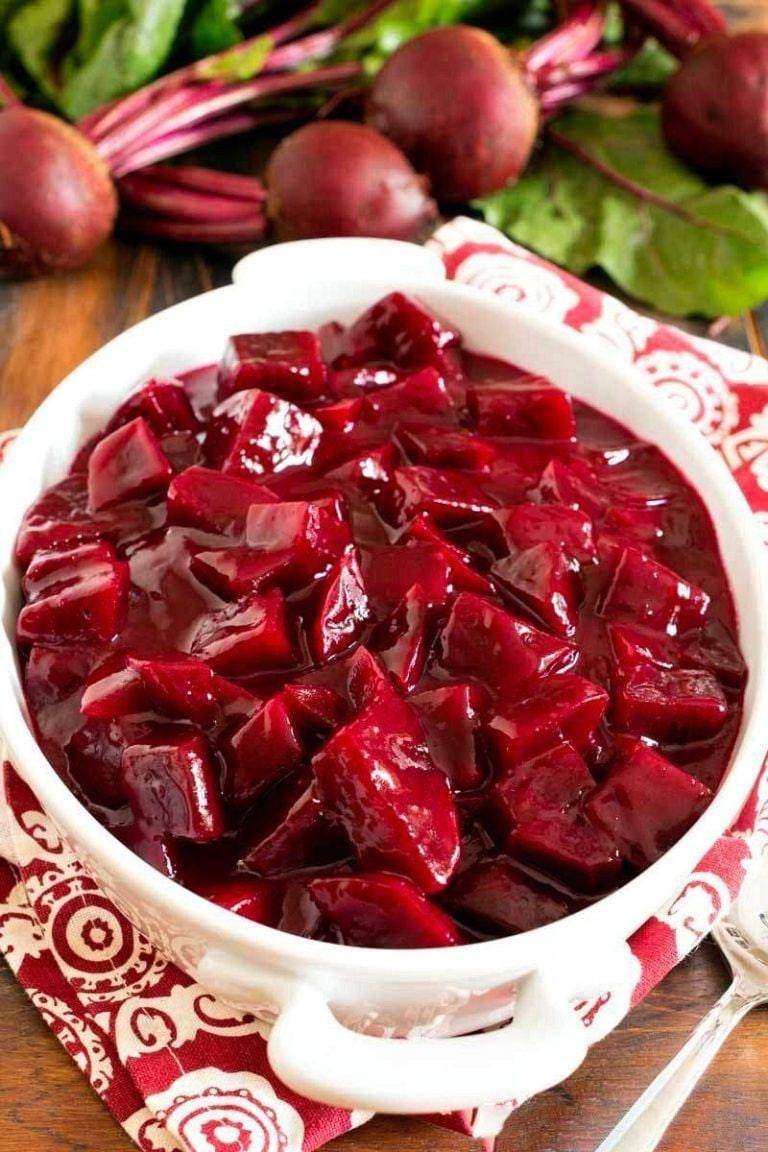
Harvard Beets are a classic American side dish, a holdover from mid-20th-century dinner tables, known for their vibrant color and sweet-and-sour flavor profile.
Here’s everything you need to know about this nostalgic dish, from its curious name to how to make it.
What Are Harvard Beets?
They are cooked beets (usually boiled or roasted, then peeled and sliced or cubed) served in a thick, sweet, and tangy sauce made from sugar, vinegar, and cornstarch. The sauce is a brilliant, glossy crimson and clings beautifully to the beets.
Why Are They Called “Harvard” Beets?
The name is shrouded in charming food lore, not fact:
-
The Crimson Connection: The most popular theory is that the deep red color of the dish resembled Harvard University’s school color, crimson.
-
A Tavern Namesake: Some claim it was invented or popularized by a tavern in England named “Harwood” or “Harvard,” and the name evolved.
-
A French Origin: The sauce is similar to a sauce échalote (shallot sauce) or a sauce vinaigrette, which some 19th-century chefs referred to as “harvard” in their shorthand.
Regardless, the name stuck in American cookbooks by the early 20th century.
Classic Harvard Beets Recipe
This is a straightforward, traditional version.
Ingredients:
-
1 ½ lbs fresh beets (about 4-5 medium), trimmed, or 2 (15 oz) cans of whole beets, drained*
-
½ cup granulated sugar
-
1 tablespoon cornstarch
-
½ cup apple cider vinegar or white vinegar
-
¼ cup water
-
2 tablespoons unsalted butter
-
½ teaspoon salt
-
Optional garnish: grated orange zest or a pinch of ground cloves.
Instructions:
-
Cook the Beets (if using fresh):
-
Leave 1-inch stems and roots to prevent bleeding. Boil or steam whole, unpeeled beets until fork-tender (45-60 mins).
-
Drain, let cool slightly, then slip off the skins under running water. Slice or cube.
-
-
Make the Harvard Sauce:
-
In a medium saucepan, whisk together the sugar and cornstarch.
-
Gradually whisk in the vinegar and water until smooth.
-
Cook over medium heat, stirring constantly, until the mixture comes to a simmer and thickens into a clear, glossy syrup (about 3-5 minutes).
-
-
Combine:
-
Remove from heat. Stir in the butter and salt until the butter melts.
-
Gently fold in the cooked (or canned) beets until evenly coated.
-
-
Serve: Can be served warm, at room temperature, or chilled. They are often served as a side to roasted or grilled meats (like pork chops, ham, or meatloaf).
Key Characteristics & Tips
-
Flavor: A distinct, sweet-tart balance. Not pickled, but more syrupy and less sharp than pickled beets.
-
Color: The sauce should be a deep, transparent, jewel-toned red.
-
Texture: The beets should be tender but not mushy; the sauce should be thick enough to coat the back of a spoon.
-
Pro-Tip: For a richer flavor, use ½ cup of the beet cooking liquid instead of plain water in the sauce.
-
Modern Twist: Add a teaspoon of freshly grated ginger or orange juice to the sauce for brightness.
How They Differ from Similar Beet Dishes
-
vs. Pickled Beets: Harvard beets have a thick, cooked sauce and are served immediately or stored for a few days. Pickled beets are preserved in a vinegar brine (often with spices) and stored for weeks.
-
vs. Plain Roasted Beets: Harvard beets are all about the sweet-and-sour glazed sauce, while roasted beets highlight the vegetable’s natural earthy sweetness.
Serving Tradition
Harvard beets were a staple of the “ladies’ luncheon,” church suppers, and classic meat-and-three diners. They add a burst of color and a sweet-accent to balance savory, rich main courses.
It’s a dish that tastes like history—simple, vivid, and comfortingly familiar. Enjoy this delicious piece of American culinary heritage!