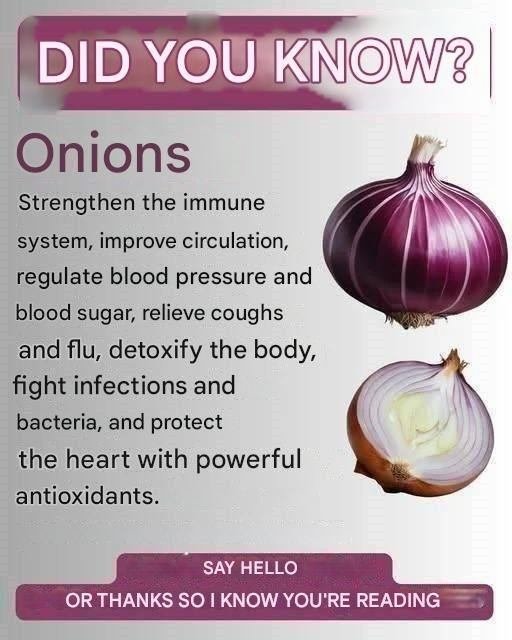
Onions are far more than just a kitchen staple for adding flavor. They are packed with nutrients and bioactive compounds that offer a wide range of proven health benefits. Here’s a detailed breakdown:
1. Nutrient-Rich, Yet Low in Calories
Onions are a great source of vitamins, minerals, and fiber while being very low in calories.
-
Vitamins: Vitamin C (immune function, collagen synthesis), B vitamins (including folate and B6 for metabolism and red blood cell formation).
-
Minerals: Potassium (blood pressure regulation), manganese (bone health, metabolism).
-
Fiber: Particularly prebiotic fiber like inulin and fructooligosaccharides (FOS), which feed beneficial gut bacteria.
2. Packed with Antioxidants
Onions are exceptionally high in antioxidant compounds, primarily quercetin and sulfur-containing compounds.
-
Quercetin: A potent flavonoid antioxidant that fights inflammation, may help lower blood pressure, and is linked to a reduced risk of certain cancers.
-
Sulfur Compounds: Give onions their pungent smell and are responsible for many of their health-promoting effects, including antioxidant and anti-inflammatory properties.
3. Heart Health Support
Regular consumption of onions is beneficial for the cardiovascular system.
-
May Lower Blood Pressure: Quercetin has been shown to help reduce blood pressure in people with hypertension.
-
Cholesterol Management: Studies suggest onions can help lower total and “bad” LDL cholesterol while maintaining “good” HDL cholesterol.
-
Anti-inflammatory and Anti-clotting: Their compounds reduce chronic inflammation and may help prevent unwanted blood clot formation.
4. Cancer-Fighting Potential
Epidemiological studies consistently link a diet high in allium vegetables (like onions and garlic) with a lower risk of certain cancers.
-
Compounds like quercetin and organosulfurs may inhibit tumor growth and promote cancer cell death (apoptosis).
-
Strongest associations are seen with cancers of the digestive tract, such as stomach and colorectal cancers.
5. Blood Sugar Control
Onions can be particularly helpful for people with diabetes or prediabetes.
-
The sulfur compounds (like S-methylcysteine) and quercetin have shown anti-diabetic effects.
-
They may improve insulin sensitivity and lower blood glucose levels.
6. Bone Density Enhancement
Surprisingly, onions may be good for bone health.
-
Observational studies, particularly in older women, have linked frequent onion consumption with greater bone density and a reduced risk of hip fractures.
-
The antioxidant properties are believed to reduce oxidative stress, which can lead to bone loss.
7. Powerful Prebiotic for Gut Health
The fiber in onions, inulin and FOS, acts as a prebiotic.
-
Feeds beneficial gut bacteria (like Bifidobacteria and Lactobacilli), promoting a healthy gut microbiome.
-
A healthy gut flora improves digestion, boosts immunity, and enhances nutrient absorption.
8. Antimicrobial Properties
Onions have been used traditionally to fight infections.
-
Their extracts can inhibit the growth of potentially harmful bacteria like E. coli and S. aureus.
-
Quercetin is known to have antibacterial and antiviral properties.
9. Digestive Health
The prebiotic fiber not only feeds good bacteria but also adds bulk to stool, promoting regular bowel movements and potentially reducing the risk of colon issues.
Important Considerations & Maximizing Benefits:
-
Type Matters: Red and yellow onions tend to have higher antioxidant levels (especially quercetin) than white onions.
-
Preparation: Eating onions raw (in salads, salsas) preserves the most quercetin. Cooking, especially boiling, can leach some nutrients into the water. Sautéing, roasting, or grilling is a good middle ground that retains flavor and many benefits.
-
The “Cry” Factor: The sulfur compounds that make you cry are the same ones providing major health benefits. A sharp knife and chilling the onion beforehand can reduce irritation.
-
Moderation: Excessive consumption can cause digestive discomfort (gas, bloating) in some people, especially those with sensitive guts (like IBS).
Summary Table:
| Benefit | Key Active Compound(s) |
|---|---|
| Antioxidant Power | Quercetin, Anthocyanins (in red) |
| Heart Health | Quercetin, Organosulfur compounds |
| Cancer Prevention | Organosulfur, Quercetin |
| Blood Sugar Control | Sulfur compounds, Quercetin |
| Bone Health | Antioxidants, possibly peptides |
| Gut Health | Inulin, FOS (prebiotic fiber) |
| Anti-inflammatory | Quercetin |
| Antimicrobial | Sulfur compounds, Quercetin |
In short, incorporating onions into your daily diet is a simple, flavorful, and powerful way to boost your overall health. They are truly a functional food disguised as a humble vegetable.