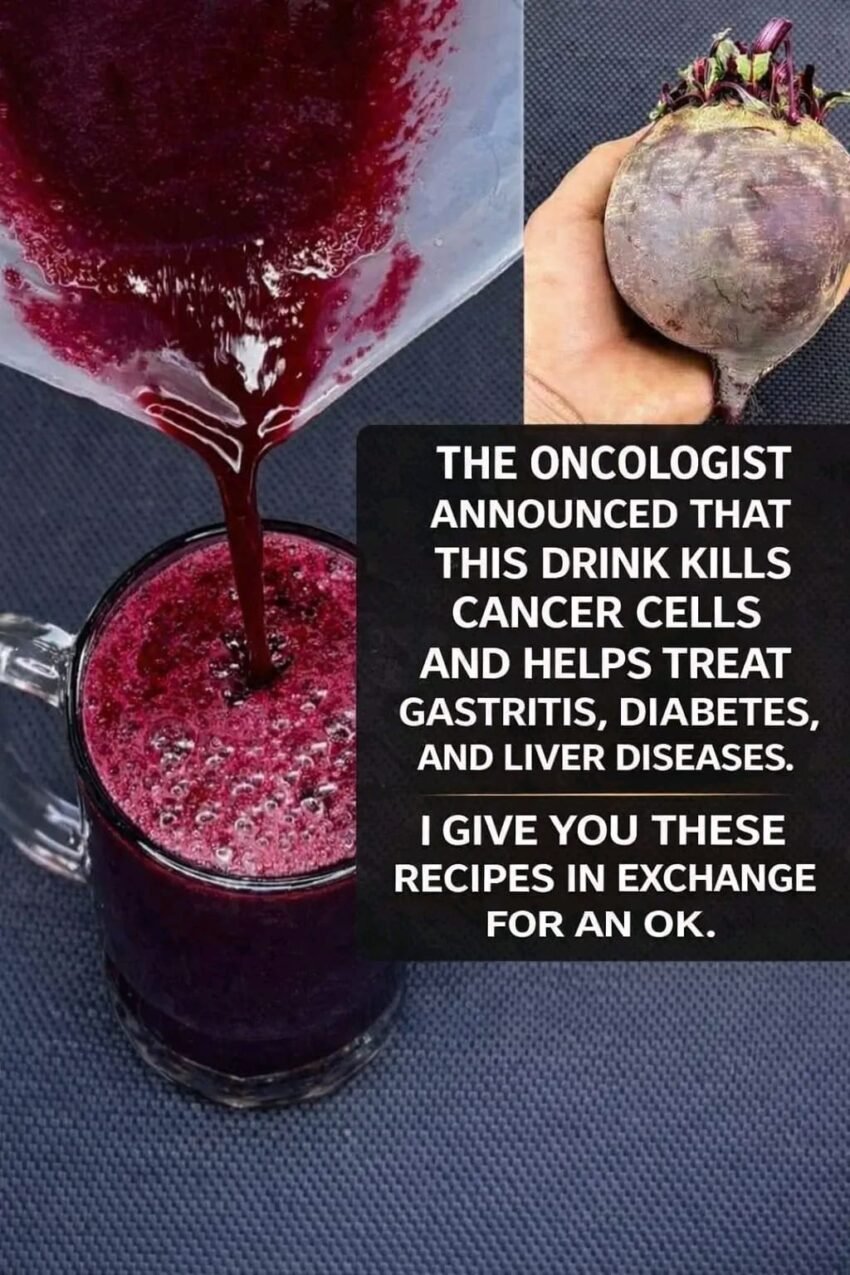
This claim about beetroot juice is a dangerous oversimplification and distortion of scientific research. While beetroot is a nutritious food with potential health benefits, it is not a proven cure for cancer. Let’s separate the hopeful myth from the scientific reality.
The Origin of the Myth
This specific claim (“kills cancer cells in 42 days”) appears to be a severe misinterpretation or exaggeration of a single, small-scale laboratory study from 2011, where beetroot extract was shown to reduce tumor growth in animal models. No reputable human clinical trial has ever concluded that beetroot juice “kills cancer in 42 days” in humans.
What the Science Actually Says About Beetroot and Cancer
-
Potential in Laboratory Studies: Beetroot contains betanin (the red pigment) and other compounds like nitrates and antioxidants. In test tubes and some animal studies, these compounds have shown:
-
Antioxidant and anti-inflammatory effects.
-
Possible slowing of cancer cell division in certain cell lines (like prostate and breast cancer cells).
-
Enhancement of the effects of chemotherapy in some models.
-
-
No Human Clinical Proof: There is no evidence from human trials that drinking beetroot juice cures cancer. Cancer is a complex set of diseases with hundreds of types, and what works in a petri dish rarely translates directly to a living human body.
Why This Claim is Dangerous
-
False Hope: It can give patients and families unrealistic expectations.
-
Treatment Delay: It may lead someone to delay or forgo proven, life-saving treatments (like surgery, chemotherapy, radiation, or immunotherapy) in favor of an unproven “miracle” juice.
-
Financial Exploitation: Such claims are often used to sell expensive supplements or “alternative treatment” packages to vulnerable people.
The Legitimate Health Benefits of Beetroot Juice
While not a cancer cure, beetroot juice is a healthy beverage with proven benefits:
-
Lowers Blood Pressure: Due to its high nitrate content, which the body converts to nitric oxide—a compound that relaxes and widens blood vessels.
-
Improves Exercise Performance: Nitrates can enhance oxygen use, potentially boosting stamina.
-
Rich in Nutrients: A good source of folate, vitamin C, potassium, and iron.
The Bottom Line & What to Do
-
If You Have Cancer: NEVER use beetroot juice or any other dietary supplement as a replacement for conventional treatment. Always discuss any dietary changes with your oncologist, as some compounds can interfere with treatments.
-
For Prevention: A diet rich in a variety of colorful fruits and vegetables (including beets) is associated with a lower overall risk of some cancers. This is due to a symphony of nutrients and fiber, not one “magic bullet.”
-
Trustworthy Sources: Be highly skeptical of any source claiming a single food “cures” a complex disease. Rely on information from major cancer research organizations (like the American Cancer Society, Cancer Research UK, or the National Cancer Institute).
Final Verdict: Beetroot juice is a healthy food, not a miracle drug. Enjoy it as part of a balanced diet for its genuine benefits, but reject the dangerous myth that it is a proven cure for cancer. For cancer treatment, proven medical therapies are the only path with scientific validation.