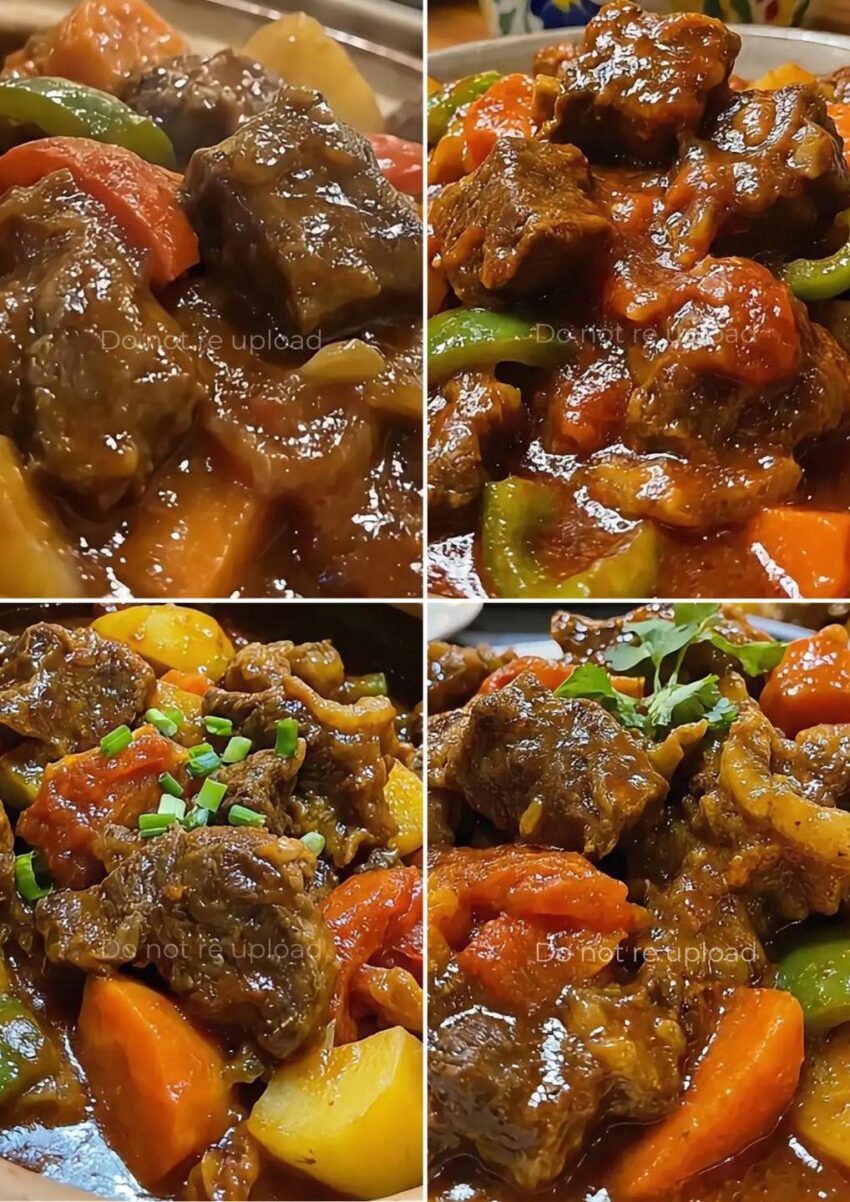
Beef Caldereta (or Kaldereta) is a beloved, rich, and hearty Filipino stew known for its savory, slightly sweet, and tangy flavor profile. It’s a festive dish, often served at parties and special occasions, featuring tender beef stewed in a thick sauce with liver spread, tomatoes, bell peppers, and olives.
Here’s a classic recipe and guide to making this iconic comfort food.
🥘 What is Caldereta?
-
Origin: A Filipino stew with Spanish influences (the name comes from the Spanish caldero, meaning “cauldron”).
-
Protein: Traditionally made with goat (kalderetang kambing), but beef (using tough, slow-cooking cuts) is the most common adaptation.
-
Signature Flavor: Comes from a base of tomatoes, tomato sauce, and liver spread (or puréed liver), which gives it a unique depth, color, and slight graininess. Peanut butter is also a common, though optional, ingredient for extra richness.
-
Key Ingredients: Potatoes, carrots, bell peppers, green olives, and sometimes chickpeas or pineapple chunks.
👩🍳 Classic Beef Caldereta Recipe
Ingredients:
-
For the Beef:
-
2 lbs (1 kg) beef chuck or brisket, cut into 1.5-inch cubes
-
3 cloves garlic, minced
-
1 large onion, chopped
-
2 tbsp soy sauce
-
2 tbsp calamansi juice or lemon juice
-
1 tsp ground black pepper
-
-
For the Sauce & Vegetables:
-
2 tbsp cooking oil
-
1 cup tomato sauce
-
1 cup beef broth or water
-
1/2 cup liver spread (or 1/4 lb chicken/beef liver, boiled and puréed)
-
2 large potatoes, cubed
-
2 large carrots, cubed
-
1 red bell pepper, sliced
-
1 green bell pepper, sliced
-
1/2 cup pitted green olives
-
2-3 pieces red chili peppers (optional, for heat)
-
2 tbsp smooth peanut butter (optional, but recommended)
-
1 tsp sugar (to balance acidity)
-
1 bay leaf
-
Salt to taste
-
Instructions:
1. Marinate the Beef (Optional but recommended):
Combine beef cubes, soy sauce, calamansi/lemon juice, and black pepper. Marinate for at least 30 minutes.
2. Brown the Beef:
In a large, heavy pot or Dutch oven, heat oil over medium-high. Brown the beef in batches. Remove and set aside.
3. Sauté the Aromatics:
In the same pot, sauté garlic and onion until soft and fragrant.
4. Build the Stew:
-
Return the beef to the pot. Add tomato sauce, beef broth, bay leaf, and chili peppers (if using). Stir to combine.
-
Bring to a boil, then lower heat, cover, and simmer for 1.5 to 2 hours, or until the beef is fork-tender. Add water as needed to keep the beef submerged. (A pressure cooker can reduce this time to 30-40 minutes).
5. Add the Signature Ingredients:
-
Once the beef is tender, stir in the liver spread and peanut butter until fully dissolved into the sauce.
-
Add potatoes and carrots. Simmer for 10-15 minutes until they are almost tender.
6. Final Touches:
-
Add bell peppers and green olives. Simmer for another 5-7 minutes until the peppers are tender-crisp.
-
Season with sugar and salt to taste. The sauce should be thick and creamy. If it’s too thick, add a splash of broth or water.
7. Serve:
Serve hot with a mountain of steamed white rice. The leftovers taste even better the next day.
🌟 Pro Tips & Variations
-
The Liver Spread is Key: It’s the non-negotiable ingredient for authentic flavor and color. Popular brands are Reno or Lady’s Choice Liver Spread. If using fresh liver, boil and purée it until smooth.
-
Tender Beef: Use a tough, collagen-rich cut and cook it low and slow. A pressure cooker or slow cooker is perfect for this.
-
Spice Level: Adjust heat with fresh chili peppers or a dash of hot sauce.
-
Pineapple: Some versions add 1/2 cup pineapple chunks (with a little juice) for a sweet-tangy twist.
-
Cheese: A modern twist is to stir in grated cheddar or Eden cheese at the end for a creamy, salty finish.
-
Lamb or Goat: For the traditional kalderetang kambing, substitute beef with goat or lamb and extend the cooking time.
Why It’s a Celebratory Dish
Caldereta is a labor of love. The long simmering time, the blend of Spanish and Filipino ingredients (tomatoes, olives, liver, soy sauce), and its vibrant, festive appearance make it a centerpiece dish. It’s a beautiful example of Filipino cuisine’s history and its ability to create something uniquely delicious from diverse influences.
Enjoy the process and the incredible, comforting results!