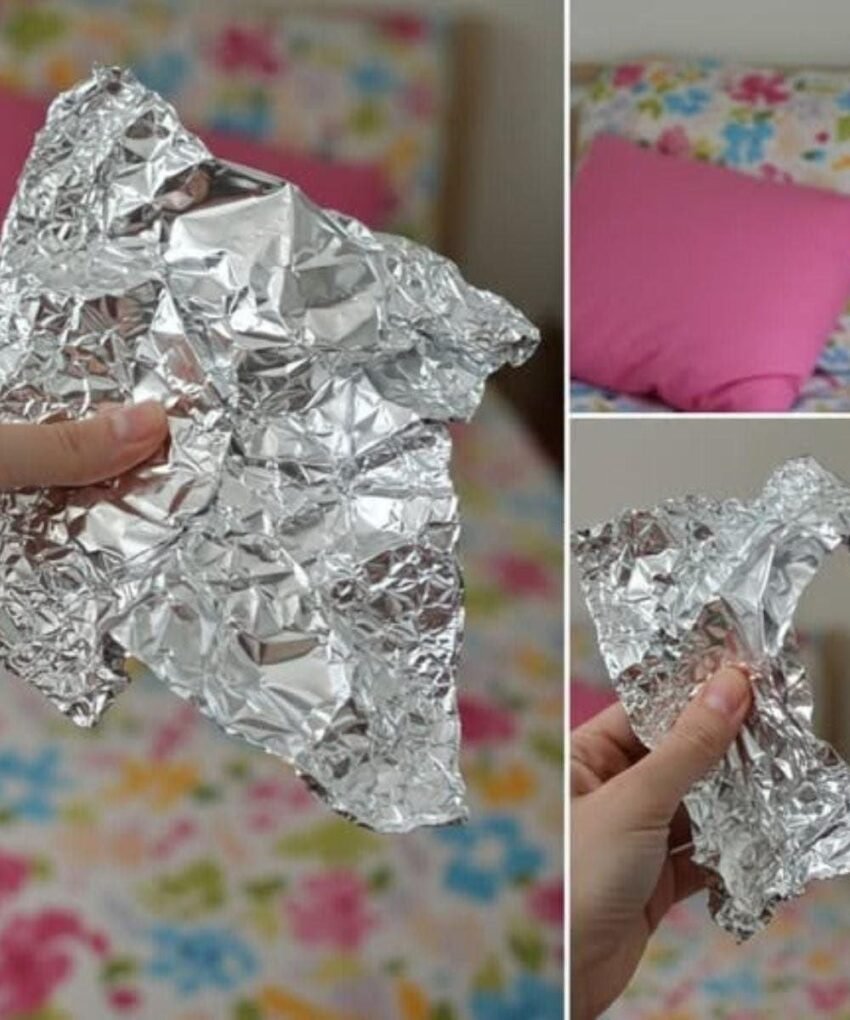
The practice of placing crumpled aluminum foil under a pillow is a folk remedy often suggested online for various issues, most commonly insomnia, muscle pain, or even to “boost energy.” It has no basis in medical science, and the mechanisms claimed by proponents don’t align with known physics or biology.
Here’s a breakdown of the claims, the reality, and some potential explanations for why people might believe it works.
Common Claims & Supposed Mechanisms
-
For Insomnia & Sleep: Proponents claim the foil “grounds” you, disrupts electromagnetic fields (EMFs) from electronics, or “aligns your body’s energy.”
-
For Muscle/Joint Pain: The idea is that the foil’s aluminum interacts with the body’s bioelectricity to reduce inflammation or pain signals.
-
For Fatigue: Similar to sleep claims, it’s said to “recharge” your body’s energy.
The Scientific & Medical Reality
-
No Evidence: There is zero credible scientific or clinical evidence that aluminum foil under a pillow affects sleep, pain, or energy levels.
-
EMF “Shielding” Misconception: While aluminum can block certain types of electromagnetic radiation (like radio waves) when used as a continuous, grounded shield, a crumpled, ungrounded piece under a pillow does not meaningfully shield the body from EMFs from devices. Moreover, the health effects of typical low-level household EMFs on sleep are not conclusively proven and are a topic of ongoing research.
-
No Bioelectric Interaction: The body’s bioelectric signals (like nerve impulses) operate on a completely different scale and principle. Aluminum foil does not interact with them in a therapeutic way.
-
Placebo Effect: This is the most likely explanation for any reported benefits. The strong belief that a simple, physical intervention will work can lead to real, perceived improvements in sleep or pain due to reduced anxiety and heightened expectation.
Potential Risks & Drawbacks
-
Noise: Crumpled foil is noisy and crinkly with every head movement, which is more likely to disrupt sleep than improve it.
-
Discomfort: Lumps under a pillow can cause neck strain or poor sleep posture.
-
Sharp Edges: If torn, foil can have sharp edges that could potentially cut the pillowcase or, in rare cases, cause a minor scratch.
-
Fire Hazard (Extremely Low Probability): If in contact with an old or faulty electrical item (like a heated blanket), it could pose a risk, but this is highly unlikely in normal use.
What Actually Works for Sleep & Pain
If you’re struggling with issues the foil is supposedly meant to fix, evidence-based solutions are far more effective:
-
For Better Sleep: Sleep hygiene is key—keep a cool, dark, quiet room; maintain a consistent schedule; avoid screens before bed; limit caffeine and alcohol.
-
For Muscle/Joint Pain: Use proven methods like heat/ice therapy, gentle stretching, over-the-counter pain relief (as directed), massage, or physical therapy.
-
For Fatigue: Address diet, hydration, exercise, stress, and rule out medical conditions like sleep apnea or anemia with a doctor.
Bottom Line
Placing crumpled aluminum foil under your pillow is a harmless but ineffective folk practice. Any perceived benefit is almost certainly due to the placebo effect.
If you have persistent sleep problems, chronic pain, or fatigue, it’s important to consult a healthcare professional rather than rely on unproven remedies. They can help you find safe, evidence-based treatments that actually work.
In short: Save the foil for your kitchen. For your health, stick to science-backed methods.