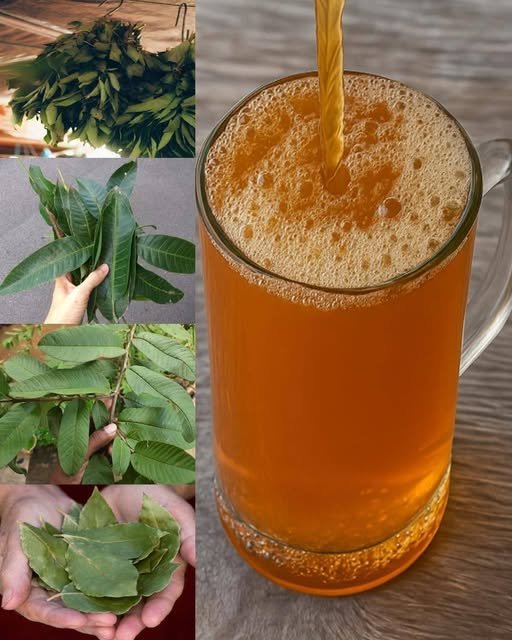
The four medicinal leaves you mentioned have been studied for their potential health benefits, though it’s important to note that most research has been conducted in laboratory or animal settings, not in human clinical trials.
Here’s what scientific research has found about avocado, mango, bay, and guava leaves.
🩺 The Therapeutic Potential of Guava Leaves
Guava leaves are the most extensively studied among the four, showing significant promise in addressing several components of metabolic syndrome—a cluster of conditions including high blood sugar, high blood pressure, and abnormal cholesterol levels .
-
Anti-Diabetic Effects: Compounds like quercetin in guava leaves help lower blood glucose by stimulating insulin secretion and promoting glucose uptake by the body’s cells . Guava leaf tea is a traditional remedy for managing blood sugar .
-
Cardiovascular Benefits: The leaves can help lower blood pressure by promoting the secretion of nitric oxide (NO) , a molecule that relaxes blood vessels. They also help reduce “bad” LDL cholesterol and triglyceride levels .
-
Weight Management: Guava leaf extract can interfere with the formation of fat cells (adipocytes), potentially helping to prevent obesity .
💓 Avocado Leaves and Heart Health
Avocado leaves have been a focus of cardiovascular research, particularly regarding their effect on blood pressure.
-
Blood Pressure Regulation: An animal study demonstrated that an aqueous extract of avocado leaves caused a hypotensive (blood pressure-lowering) effect in hypertensive rats. This effect was linked to the leaves’ ability to induce vasodilation (widening of blood vessels) .
-
Cholesterol Management: A study on hypercholesterolemic (high-cholesterol) rats found that avocado leaf tea was able to significantly lower serum cholesterol levels. The highest dose of 2 grams was effective in the first week, though the study noted a “rebound effect” with long-term use, highlighting the importance of proper dosage .
🥭 Mango Leaves: From By-Product to Nutraceutical
Mango leaves, often considered a by-product of the fruit industry, are rich in antioxidants . A 2025 review confirmed that consuming mango leaf powder or extract may help improve blood sugar control, plasma lipid levels, and endothelial function (the health of the inner lining of blood vessels), suggesting a protective role against cardiovascular complications and metabolic syndrome .
A specific animal study provided detailed data on the cholesterol-lowering potential of mango leaf extract (MLE) in diabetic rats :
| Parameter | Diabetic Control Group (Day 42) | Diabetic + MLE Group (Day 42) |
|---|---|---|
| Total Cholesterol (TC) | 107.95 mg/dL | 86.96 mg/dL |
| Triglycerides (TAG) | 130.47 mg/dL | 99.27 mg/dL |
| “Bad” LDL Cholesterol | 57.99 mg/dL | 36.17 mg/dL |
| “Good” HDL Cholesterol | 23.87 mg/dL | 30.94 mg/dL |
🍃 Bay Leaves for Inflammation and Heart Repair
Bay leaves are often used in cooking, but research suggests they have a role in supporting heart health after a cardiac event.
-
Reducing Inflammation: In a rat model of acute coronary syndrome (ACS, a type of heart attack), bay leaf extract was shown to reduce the overexpression of an enzyme called MMP-13. This is significant because MMP-13 is involved in making arterial plaque unstable and more prone to rupture .
-
Post-Heart Attack Recovery: Another animal study confirmed the anti-inflammatory effect of bay leaf extract. It successfully reduced levels of key inflammatory markers, C-reactive protein (CRP) and myeloperoxidase (MPO), in the hearts of rats that had experienced a heart attack .
🧪 Important Considerations and Caveats
While the potential of these leaves is exciting, it’s crucial to keep several things in mind:
-
Animal vs. Human Studies: The vast majority of evidence, especially for avocado and bay leaves, comes from animal models (rats, guinea pigs) . We need human clinical trials to confirm these effects and determine safe and effective dosages for people.
-
Variability in Potency: The concentration of beneficial compounds like phenols and flavonoids in the leaves is not constant. It can vary significantly depending on the plant’s genetics, the local climate, rainfall, and soil composition . A leaf from one region may be more potent than a leaf from another.
-
Preparation: These leaves are typically consumed as a tea (decoction) , powder, or extract, not eaten raw . Boiling the dried or fresh leaves in water is a common preparation method.
-
Toxicity and Side Effects: While generally considered safe when consumed in amounts typical for tea, information on long-term safety and side effects is limited. For instance, the study on avocado leaf tea noted that a high dose (2g) caused a “rebound effect” after two weeks, indicating that “more” is not necessarily “better” .
-
Medical Advice: You should always consult a doctor before using these or any herbal remedies as a treatment for a medical condition, especially if you are taking prescription medications for diabetes, high blood pressure, or high cholesterol .
I hope this detailed overview is helpful. Would you like to know more about how to prepare these leaves as teas, or are you interested in a specific leaf’s properties in more detail?