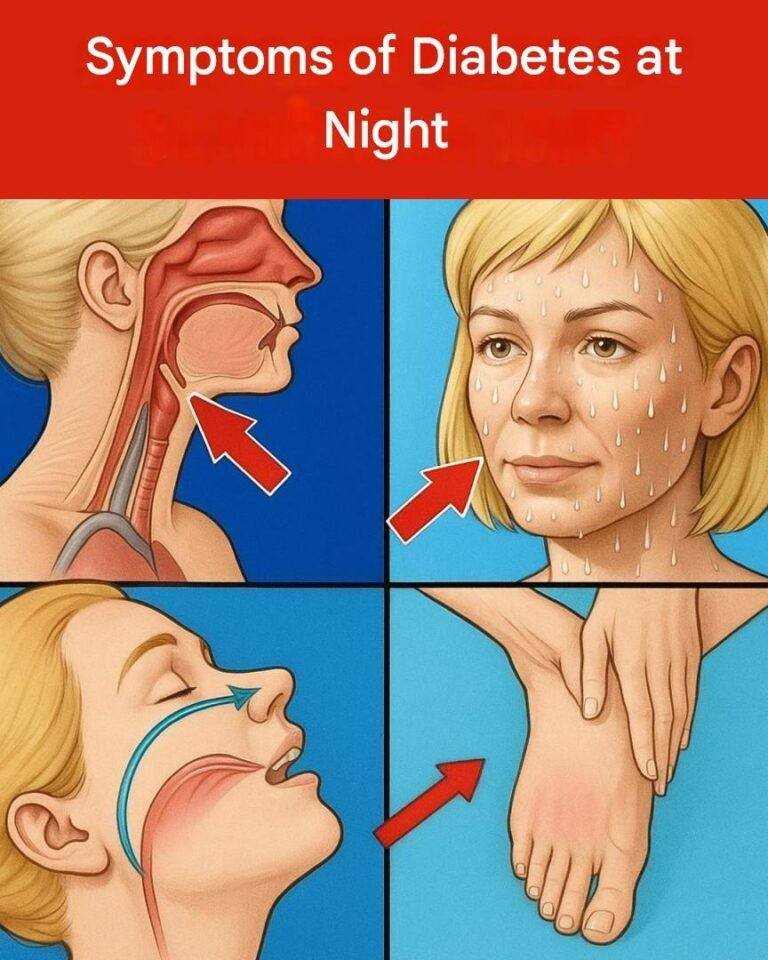
It’s common for certain diabetes symptoms to become more noticeable or pronounced at night when the body is at rest and blood sugar levels can fluctuate.
Here are 5 diabetes symptoms that often appear or worsen at night:
1. Frequent Urination (Nocturia)
-
What it feels like: Waking up multiple times during the night with an urgent need to urinate.
-
Why it happens at night: High blood sugar levels force the kidneys to work overtime to filter and absorb the excess glucose. When they can’t keep up, the extra sugar is excreted into urine, pulling fluids from your body and leading to increased urine production. This cycle continues through the night.
2. Intense Thirst and Dry Mouth
-
What it feels like: Waking up parched, with a sticky, dry mouth, needing to drink water.
-
Why it happens at night: The fluid loss from frequent urination leads to dehydration. Additionally, high blood sugar itself can draw fluid from tissues, exacerbating thirst. You might find yourself keeping a glass of water at your bedside.
3. Nighttime Hypoglycemia (Low Blood Sugar)
-
What it feels like: Waking up drenched in night sweats, feeling shaky, confused, anxious, or with a racing heart. Nightmares or crying out during sleep can also be a sign.
-
Why it happens at night: This is often related to diabetes management, such as the timing of insulin or certain medications, or not having a sufficient bedtime snack. The body’s natural overnight fasting period can also lead to a drop in blood sugar.
4. Restless Legs Syndrome (RLS) or Leg Cramps
-
What it feels like: An uncontrollable urge to move the legs, often accompanied by uncomfortable “crawling,” tingling, or aching sensations. Painful leg or foot cramps (neuropathic pain) can also jolt you awake.
-
Why it happens at night: High blood sugar over time can cause nerve damage (diabetic neuropathy). These sensations are often more noticeable when you’re still and trying to relax. Poor circulation may also play a role.
5. Unexplained Fatigue Upon Waking
-
What it feels like: Waking up after a full night’s sleep feeling exhausted, as if you haven’t slept at all.
-
Why it happens at night: The body is working inefficiently all night. Frequent trips to the bathroom, blood sugar spikes or drops, and the body’s attempt to correct imbalances (like using fluids to flush sugar) disrupt the sleep cycle and prevent deep, restorative sleep.
Important Note: Why Symptoms Often Worsen at Night
The “Dawn Phenomenon” is a key factor. In the early morning hours (around 3-8 a.m.), the body naturally releases hormones (like cortisol and growth hormone) to prepare for waking. These hormones make the body more resistant to insulin, which can cause blood sugar to rise significantly by morning, exacerbating symptoms like thirst and fatigue.
When to See a Doctor
If you are experiencing one or more of these symptoms consistently, especially if they are disrupting your sleep, it is important to:
-
Consult your healthcare provider.
-
Mention all your symptoms, even if they seem minor.
-
They can perform simple tests (like a fasting blood glucose or A1c test) to check if diabetes or prediabetes is the cause.
Disclaimer: This information is for educational purposes and is not a substitute for professional medical advice. Always consult with a healthcare provider for diagnosis and treatment.